신들이 아직 여기 있다면
한국 설화의 스물일곱 신을 지금의 자리에 놓았습니다 · 작품 27
[신들이 아직 여기 있다면] 바리공주
신들이 아직 여기 있다면
Bari Gongju, the abandoned princess of Korean shamanic myth who became the guide of the dead (Korean folk belief, Korean traditional clothing and objects, NOT Japanese, NOT Chinese.), in the family lounge of a Korean funeral hall at 3 AM. A young woman in a Korean shaman's ceremonial robe of red and yellow with long white sleeves and a small flower crown sits quietly at the end of a row of mourners' slippers by the door, holding a small bottle of clear spring water and a flowering willow branch on her lap, waiting to accompany someone. Low tables, folded mourning cushions, a stack of paper cups, fluorescent light. She is seen at a distance, filling about one third of the frame height. Gentle and patient, not frightening. No text, no letters, no hangul, no readable signs, no logos.
[신들이 아직 여기 있다면] 성주신
신들이 아직 여기 있다면
Seongjusin, the Korean house god who dwells in the main roof beam (Korean folk belief, Korean traditional clothing and objects, NOT Japanese, NOT Chinese.), on a high-rise apartment construction site at dawn. A dignified elderly man in a plain white hanbok and black gat hat sits on the end of a steel I-beam high above the city, legs dangling, holding a folded sheet of white hanji paper tied with a skein of thread — the traditional Seongju offering — beside him a bundle of dried rice stalks. Tower cranes, rebar, a half-built concrete core below, the city waking under thin mist. The man fills about one fifth of the frame height. Proud and content, not dramatic. No text, no letters, no hangul, no readable signs, no logos.
[신들이 아직 여기 있다면] 서낭신
신들이 아직 여기 있다면
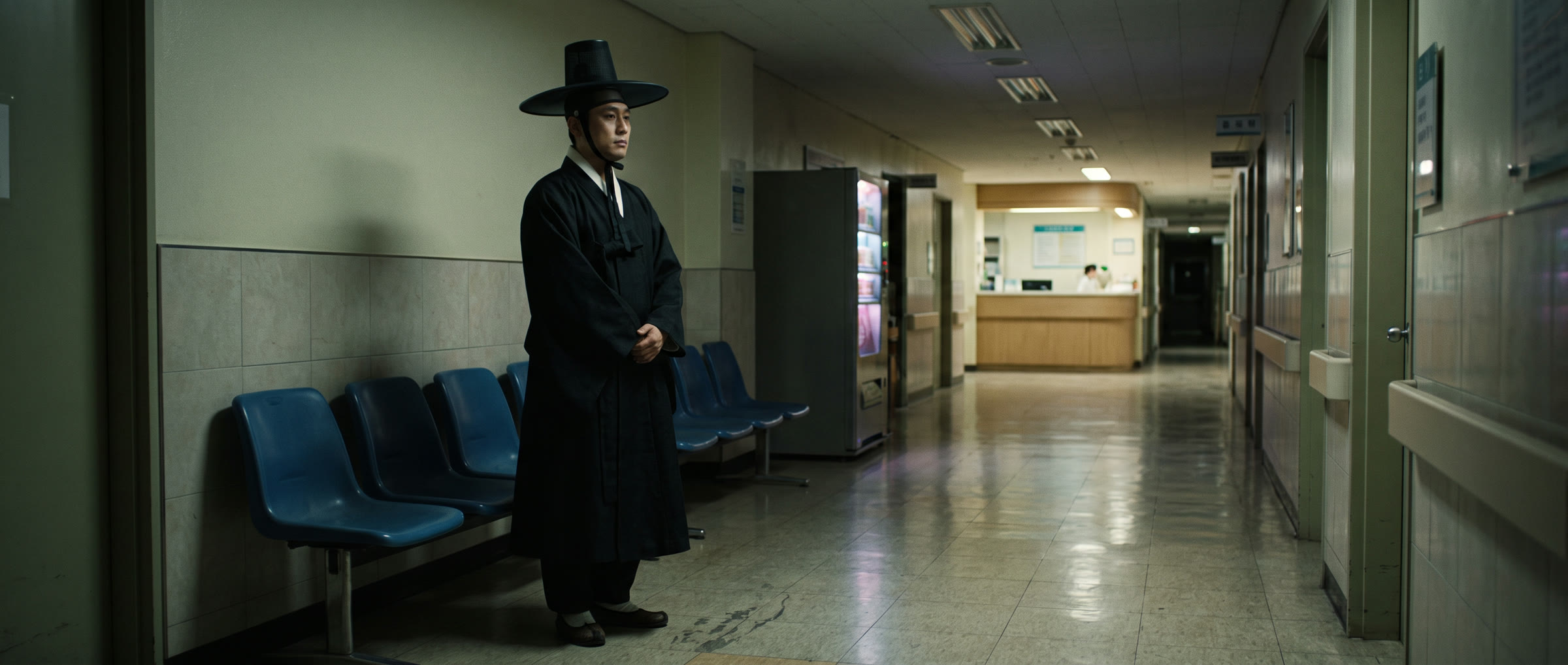
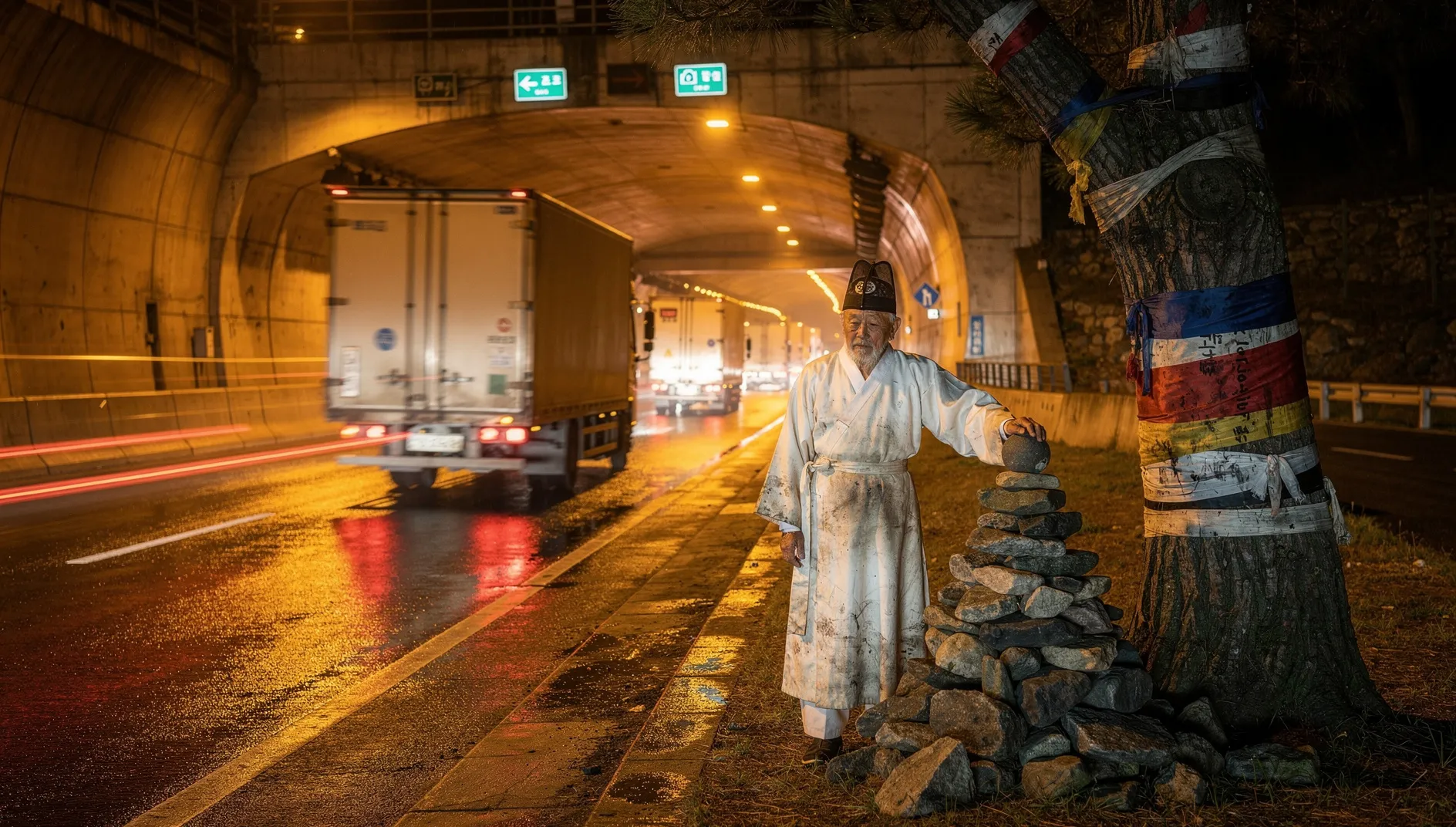
Seonangsin, the Korean guardian spirit of mountain passes (Korean folk belief, Korean traditional clothing and objects, NOT Japanese, NOT Chinese.), at the mouth of a highway tunnel at night. Beside the hard shoulder stands an old seonangdang shrine tree wrapped with faded cloth strips in the five Korean obangsaek colours (blue, red, yellow, white, black) and a cairn of piled stones. A tall elderly figure in a worn white Korean durumagi coat and black gat hat stands by the cairn with one hand resting on it, watching the trucks pass, his outline faintly luminous. Orange sodium tunnel lights, red tail-light streaks from long exposure, wet asphalt. The figure fills about one quarter of the frame height. Watchful and calm, not threatening. No text, no letters, no hangul, no readable signs, no logos.
[신들이 아직 여기 있다면] 해태
신들이 아직 여기 있다면
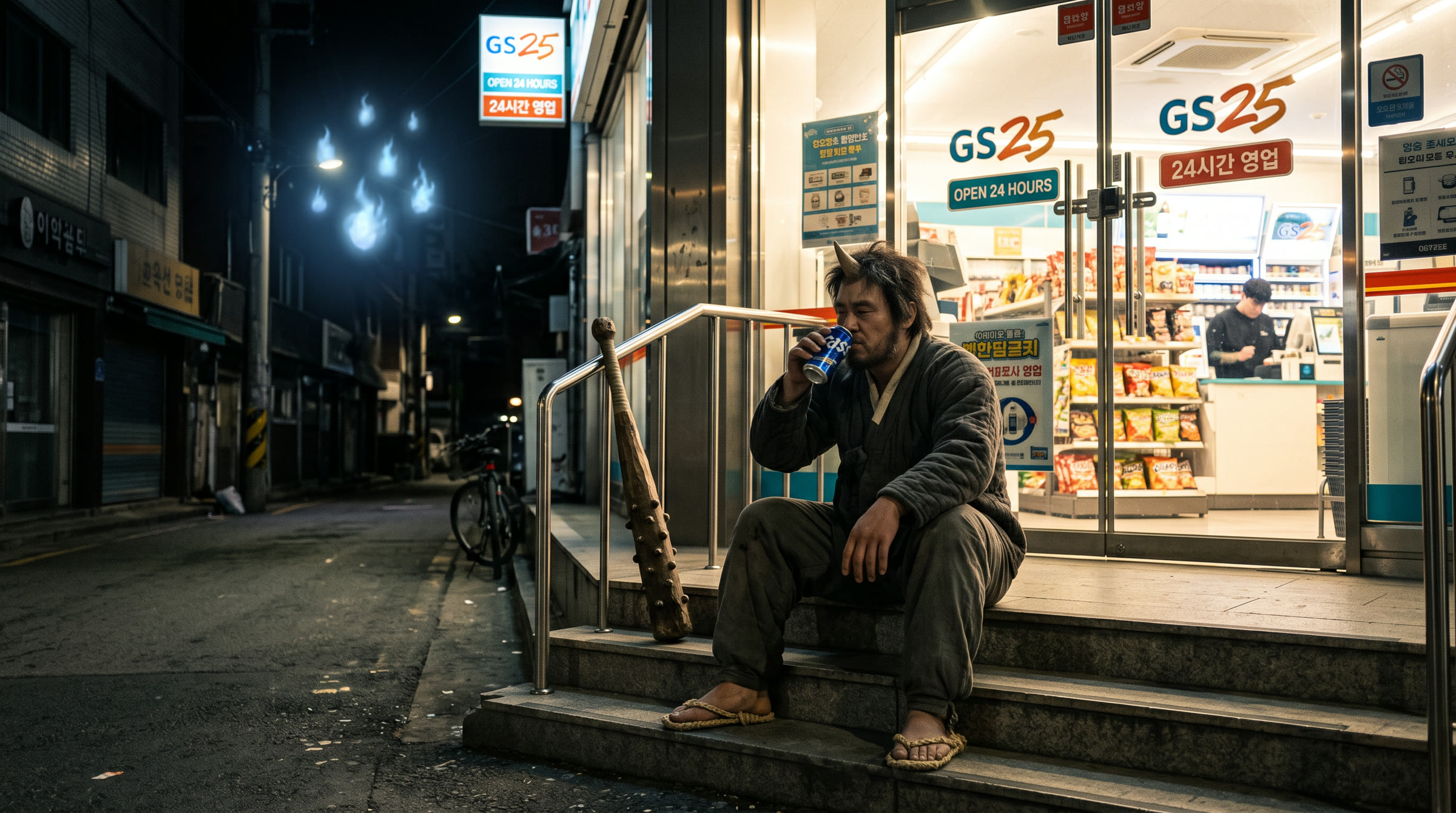
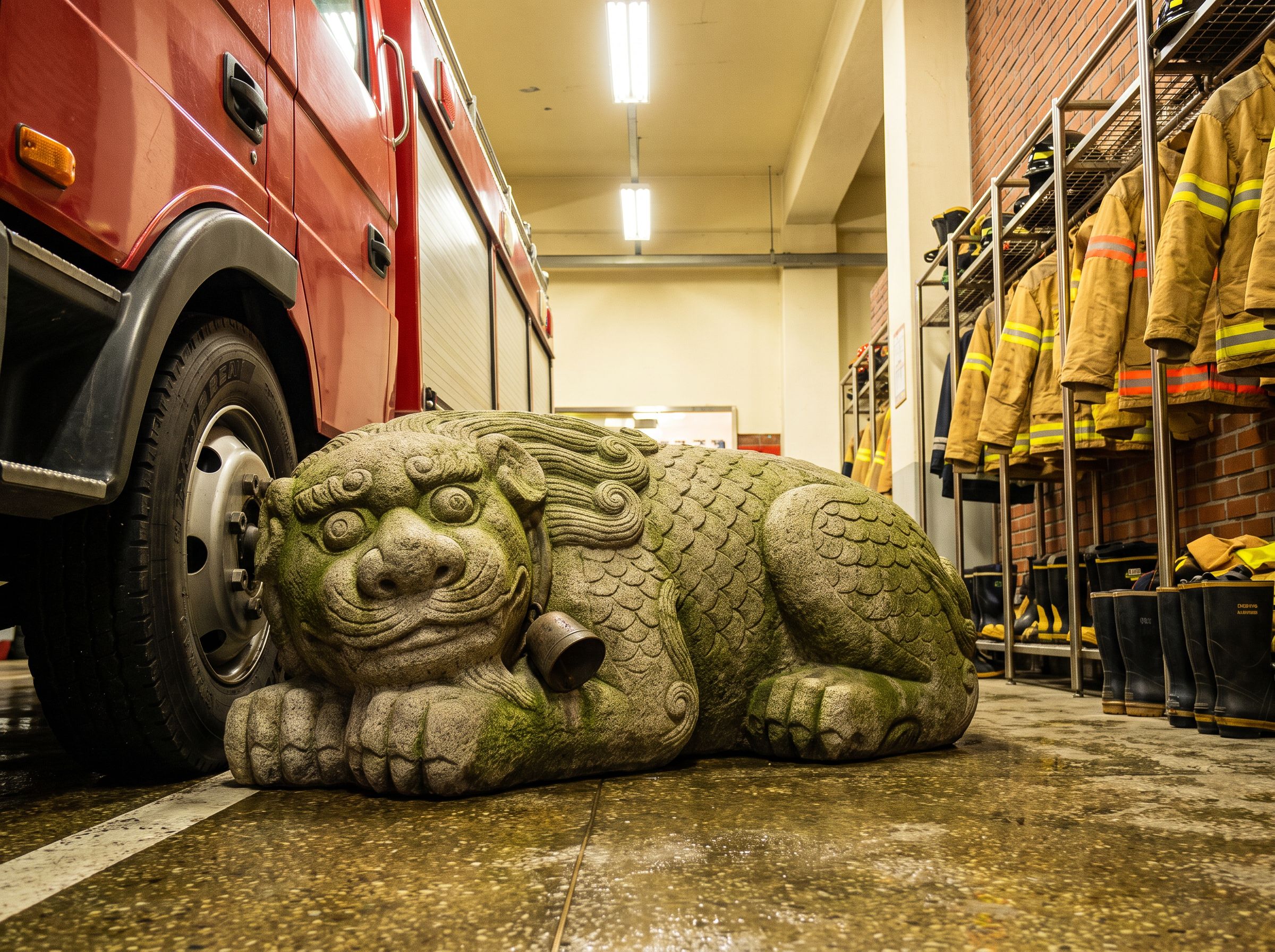
A Korean haetae, the mythical guardian beast that protects against fire (Korean folk belief, Korean traditional clothing and objects, NOT Japanese, NOT Chinese.): a stocky granite creature with a curly carved mane, round bulging friendly eyes, a scale pattern over its body and a small bell on its chest — NOT a Chinese guardian lion, NOT a Japanese komainu. It has quietly come alive and lies curled up like a big old dog on the floor of a Korean fire station garage, beside the front wheel of a red fire engine with no markings, its stone chin resting on its paws. Firefighters' boots and folded turnout gear stand ready by the wall. Fluorescent light, glossy concrete floor. Warm and slightly comic. No text, no letters, no hangul, no readable signs, no logos.
[신들이 아직 여기 있다면] 칠성신
신들이 아직 여기 있다면
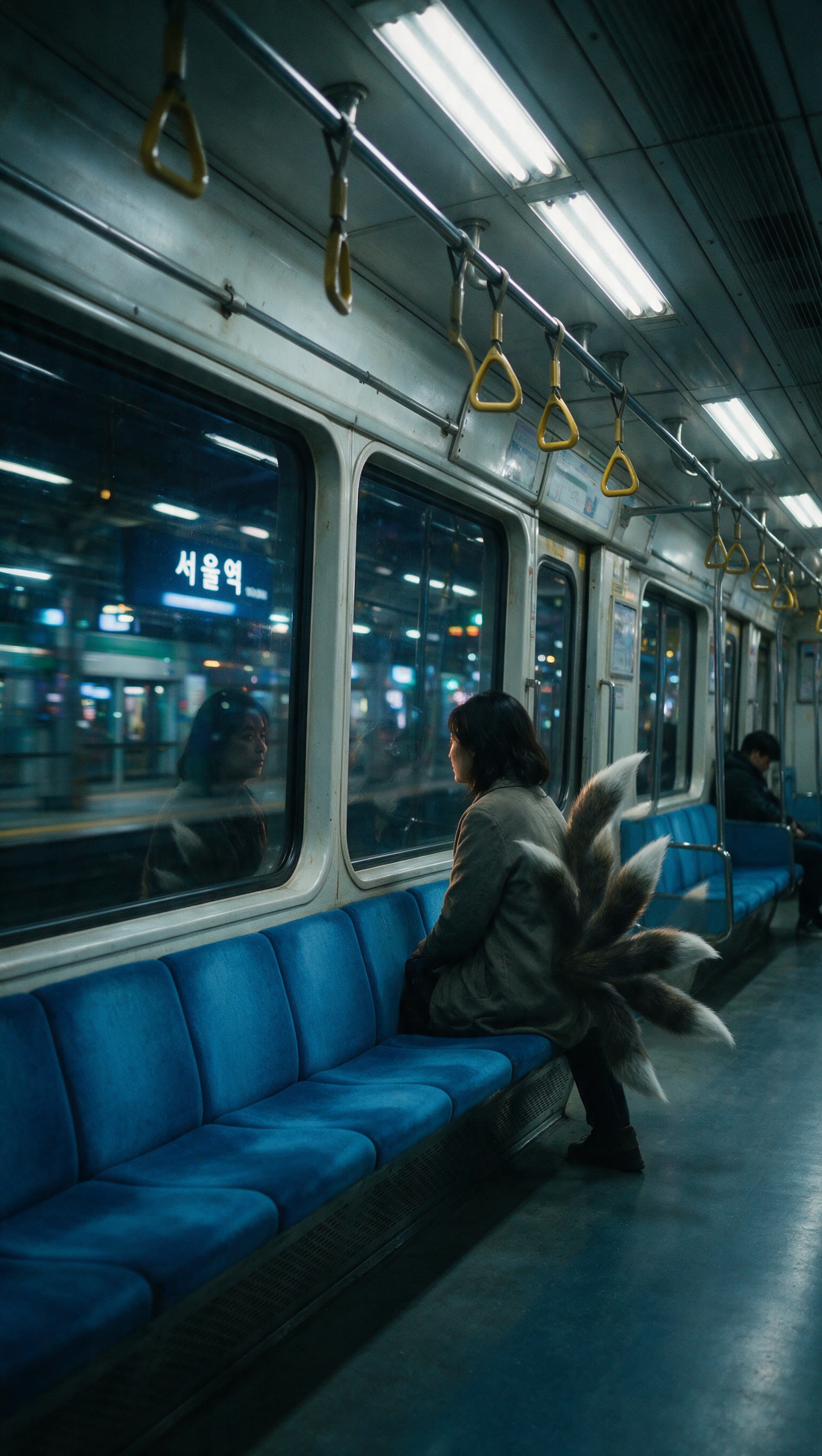
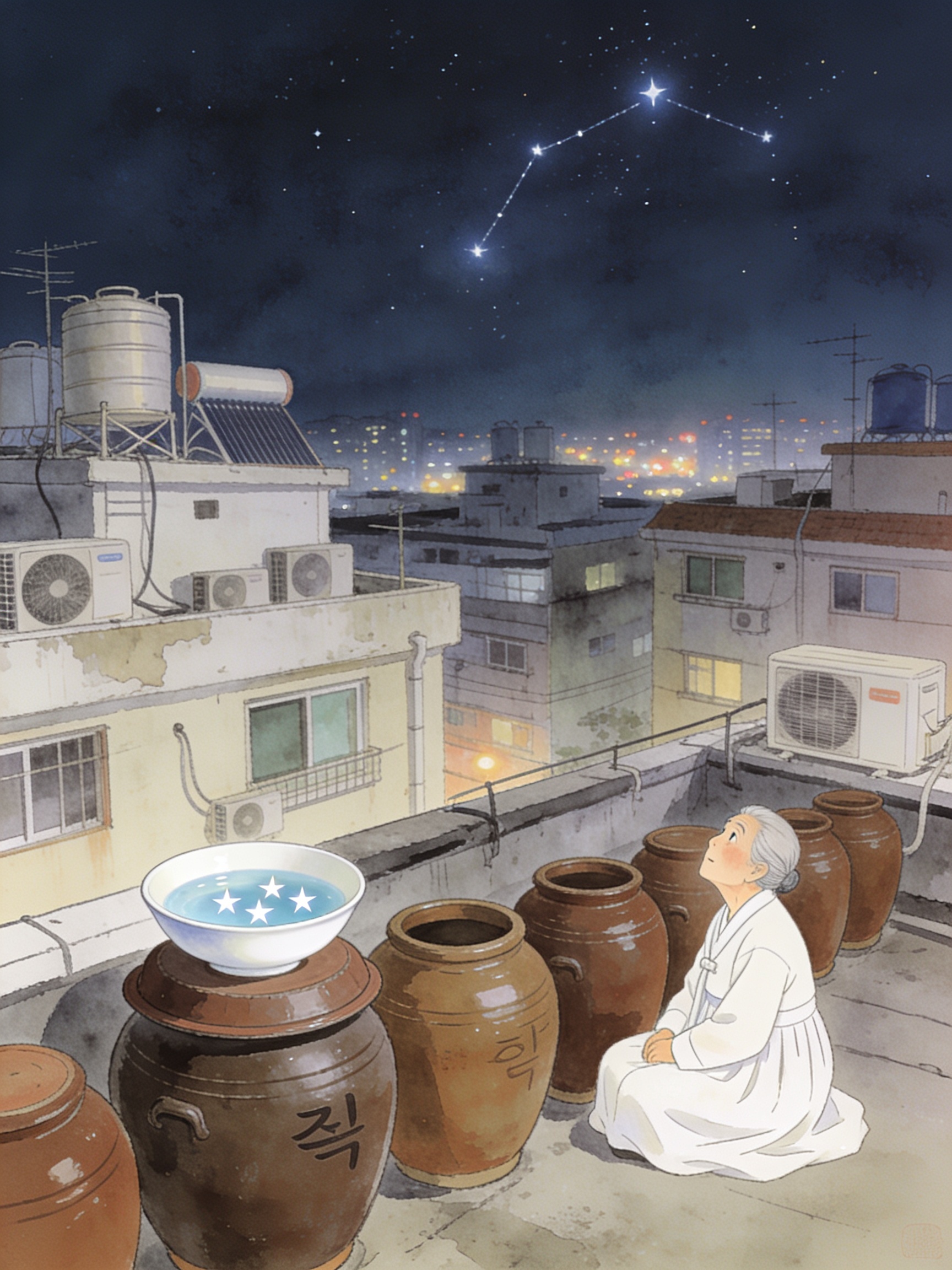
Chilseongsin, the Korean deity of the Big Dipper who watches over long life (Korean folk belief, Korean traditional clothing and objects, NOT Japanese, NOT Chinese.), on the rooftop of an old Korean apartment building at night. Among air-conditioner units and water tanks stand a row of brown earthenware jangdok jars, and on one lid sits a white porcelain bowl of clean water as an offering, reflecting seven bright stars. An old figure in a white hanbok sits beside the jars looking up. Above, the seven stars of the Big Dipper shine unnaturally bright through the city glow. The upper half of the frame is night sky, the figure fills about one fifth of the frame height. Serene. No text, no letters, no hangul, no readable signs, no logos.
[신들이 아직 여기 있다면] 영등할망
신들이 아직 여기 있다면
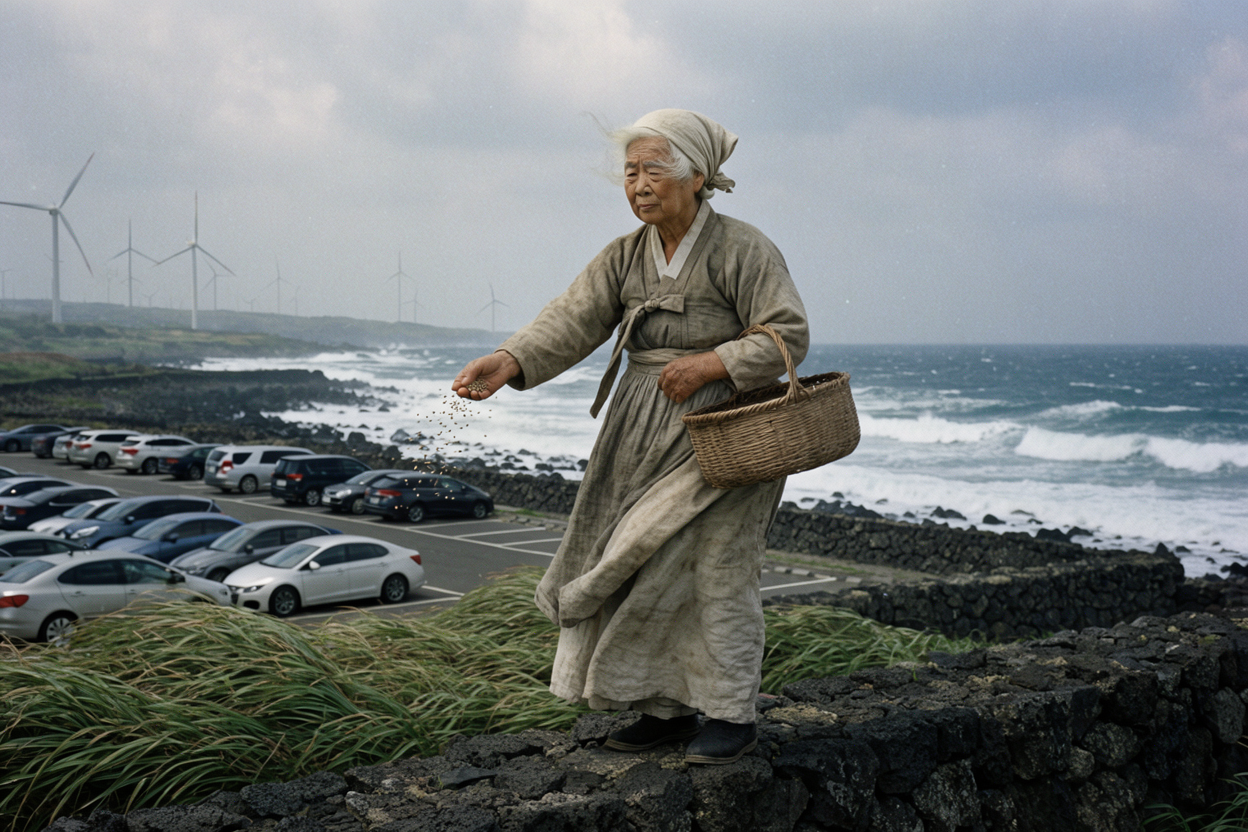
Yeongdeung Halmang, the Jeju wind goddess who visits the island each second lunar month to sow seaweed and shellfish (Korean folk belief, Korean traditional clothing and objects, NOT Japanese, NOT Chinese.), standing on a black volcanic-stone field wall (batdam) on Jeju island beside a rental-car lot, with modern wind turbines turning on the ridge behind. An old woman in plain layered Jeju working clothes and a headscarf, white hair and clothes blown hard sideways by the wind, carries a woven basket of seeds on her hip and scatters a handful toward the sea. Low grey sky, wind-bent grass, waves breaking white. 35mm film photograph look, muted colour, visible grain. She fills about one third of the frame height. Strong and unhurried. No text, no letters, no hangul, no readable signs, no logos.
[신들이 아직 여기 있다면] 마고할미
신들이 아직 여기 있다면
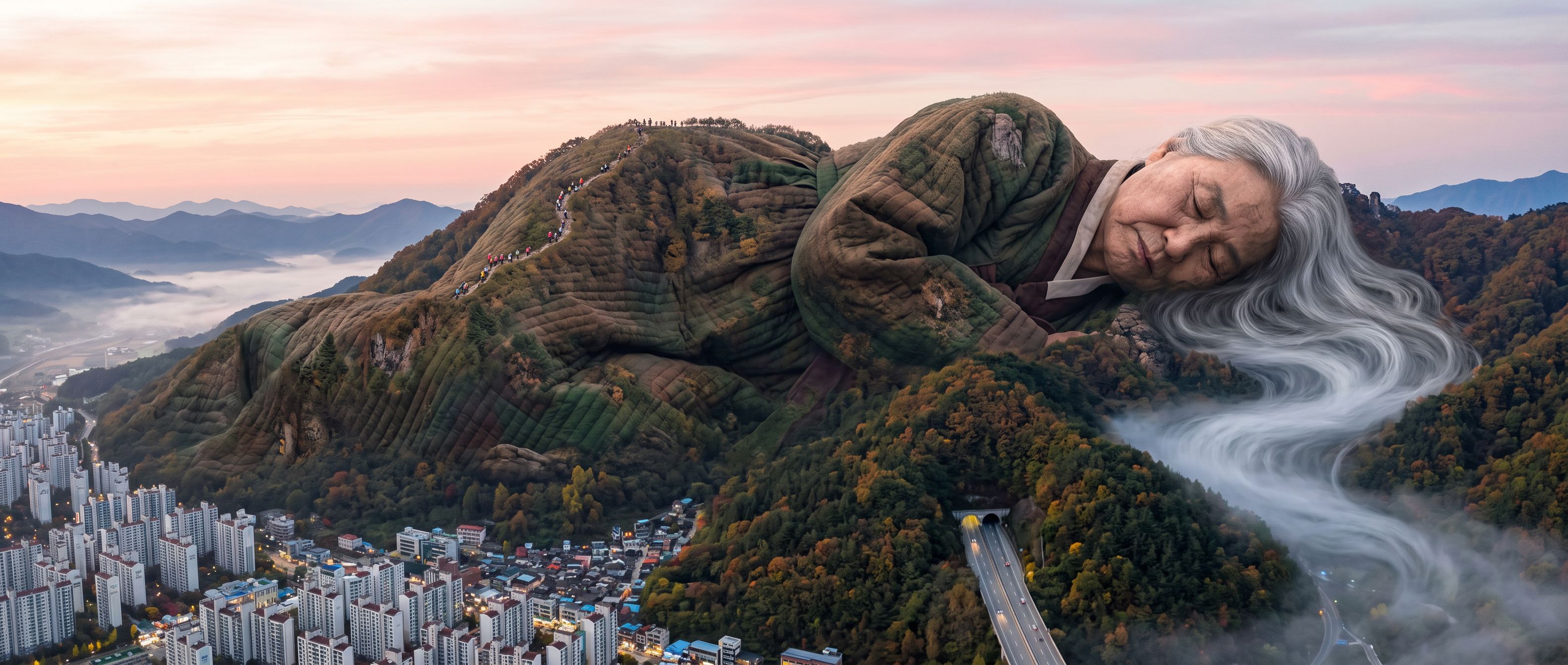
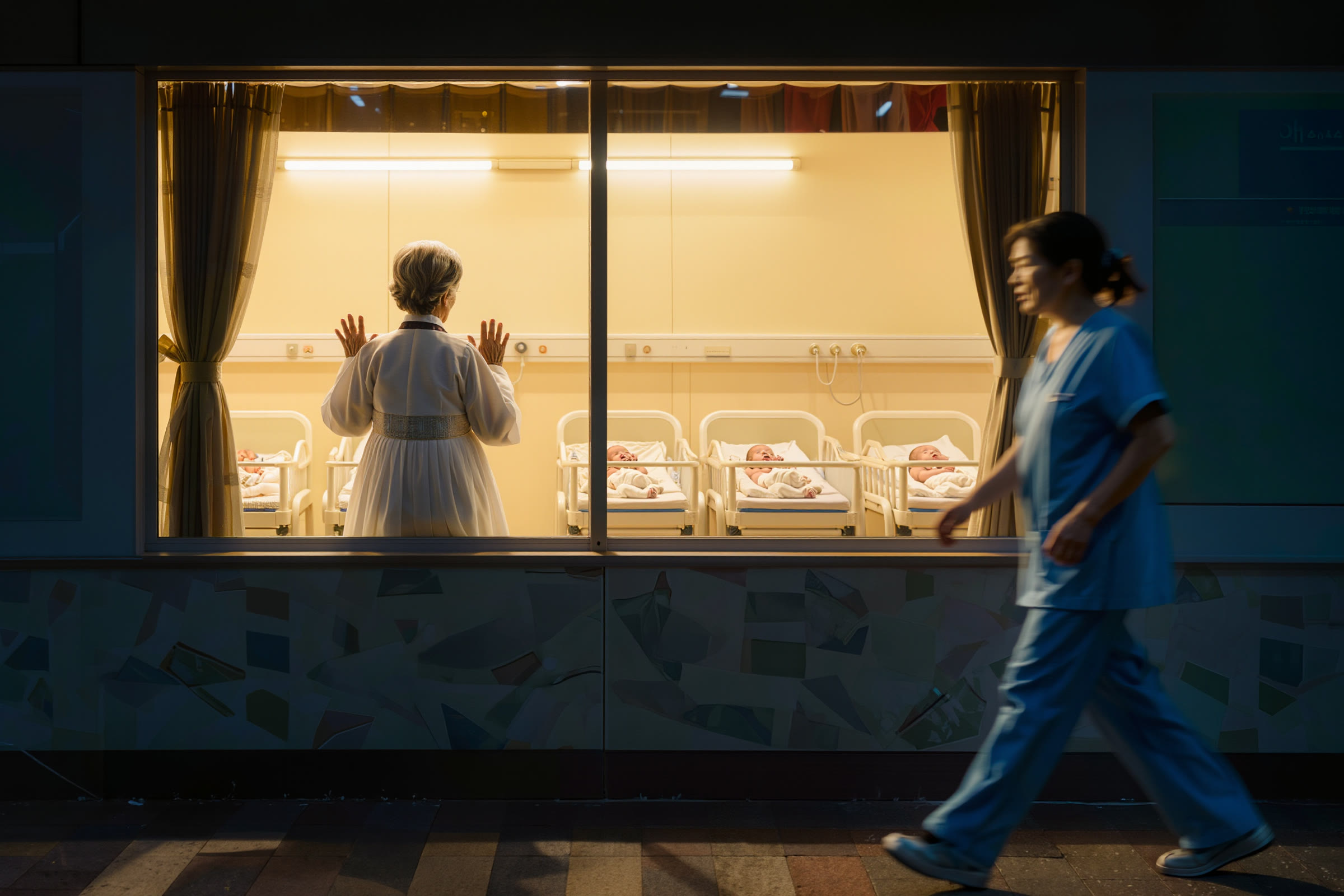
Mago Halmi, the giant creator grandmother of Korean myth who shaped the mountains and islands (Korean folk belief, Korean traditional clothing and objects, NOT Japanese, NOT Chinese.), lying asleep on her side as part of a mountain range beside a new Korean apartment town at dawn. Her body IS the ridge: forested slopes form her shoulder and hip, a rocky outcrop is her cheek, her long grey hair spreads down the valley as a river of mist. A highway passes through a tunnel under her knee, a hiking trail with tiny hikers follows her shoulder, and the apartment blocks at the bottom of the frame are tiny by comparison. Soft pink dawn light, aerial telephoto view. Peaceful. No text, no letters, no hangul, no readable signs, no logos.
[신들이 아직 여기 있다면] 측신
신들이 아직 여기 있다면
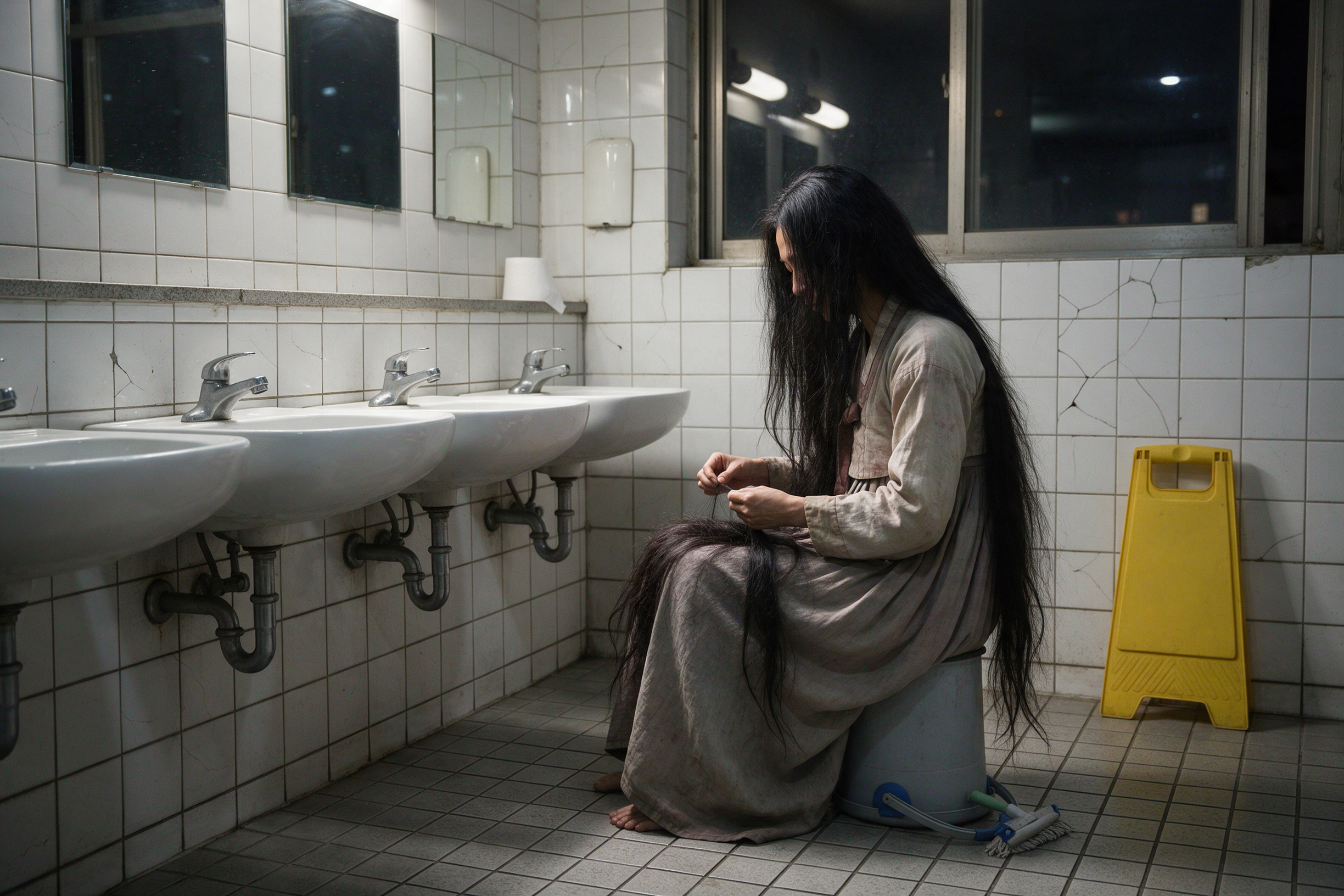
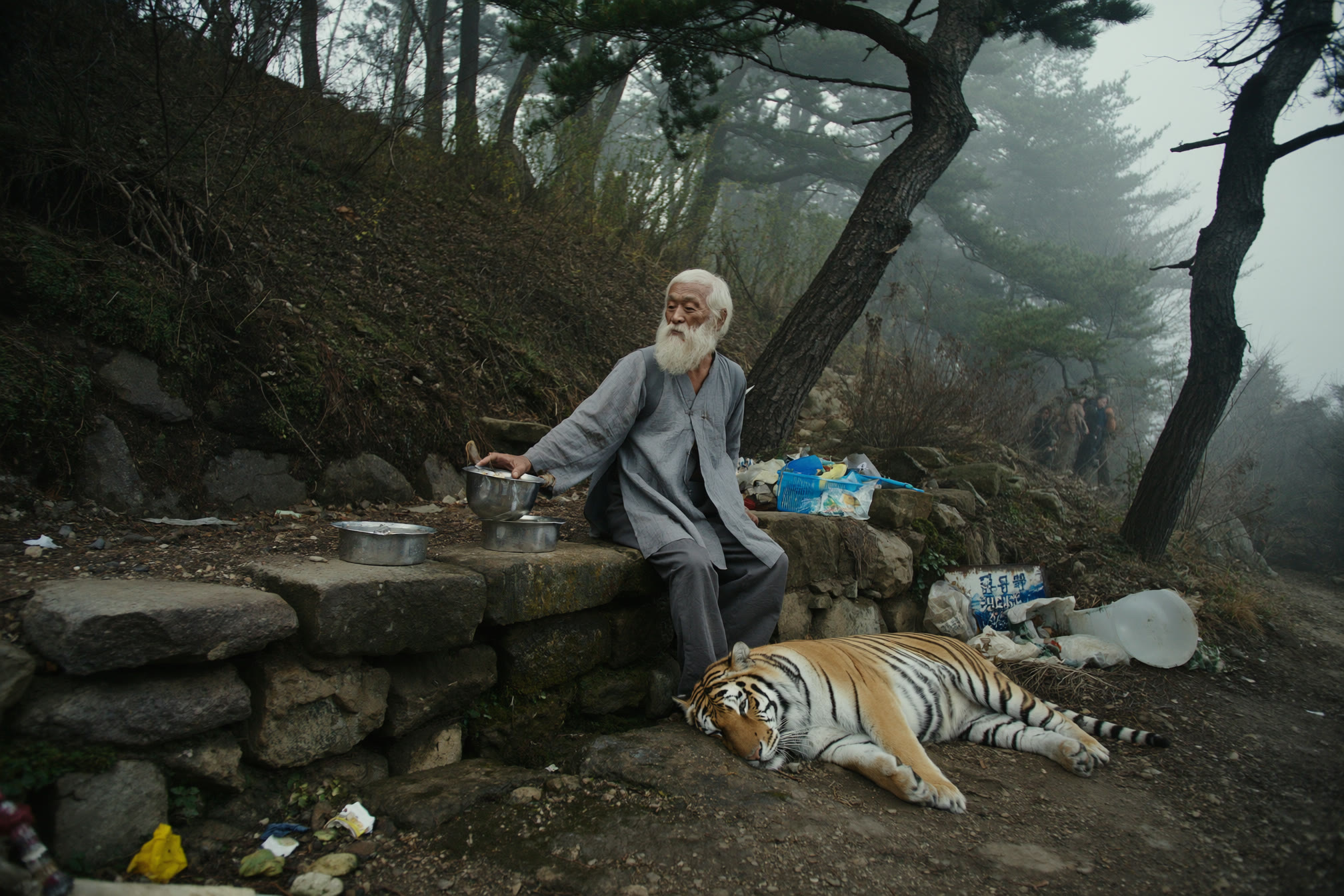
Cheukshin, the Korean goddess of the outhouse (Korean folk belief, Korean traditional clothing and objects, NOT Japanese, NOT Chinese.), now living in the shared restroom of an old commercial building at night. A thin woman with extremely long black hair that reaches the floor, wearing a faded plain hanbok jeogori and long skirt, sits on an upturned mop bucket beside the row of sinks, patiently counting the strands of her hair one by one in her lap. Motion-sensor lights, cracked white tiles, a yellow cleaning sign with no writing, a roll of paper towels. She is seen from the side at a distance, filling about one third of the frame height, face partly hidden by her hair. Quietly absorbed and slightly comic, not frightening. No text, no letters, no hangul, no readable signs, no logos.
[신들이 아직 여기 있다면] 손
신들이 아직 여기 있다면
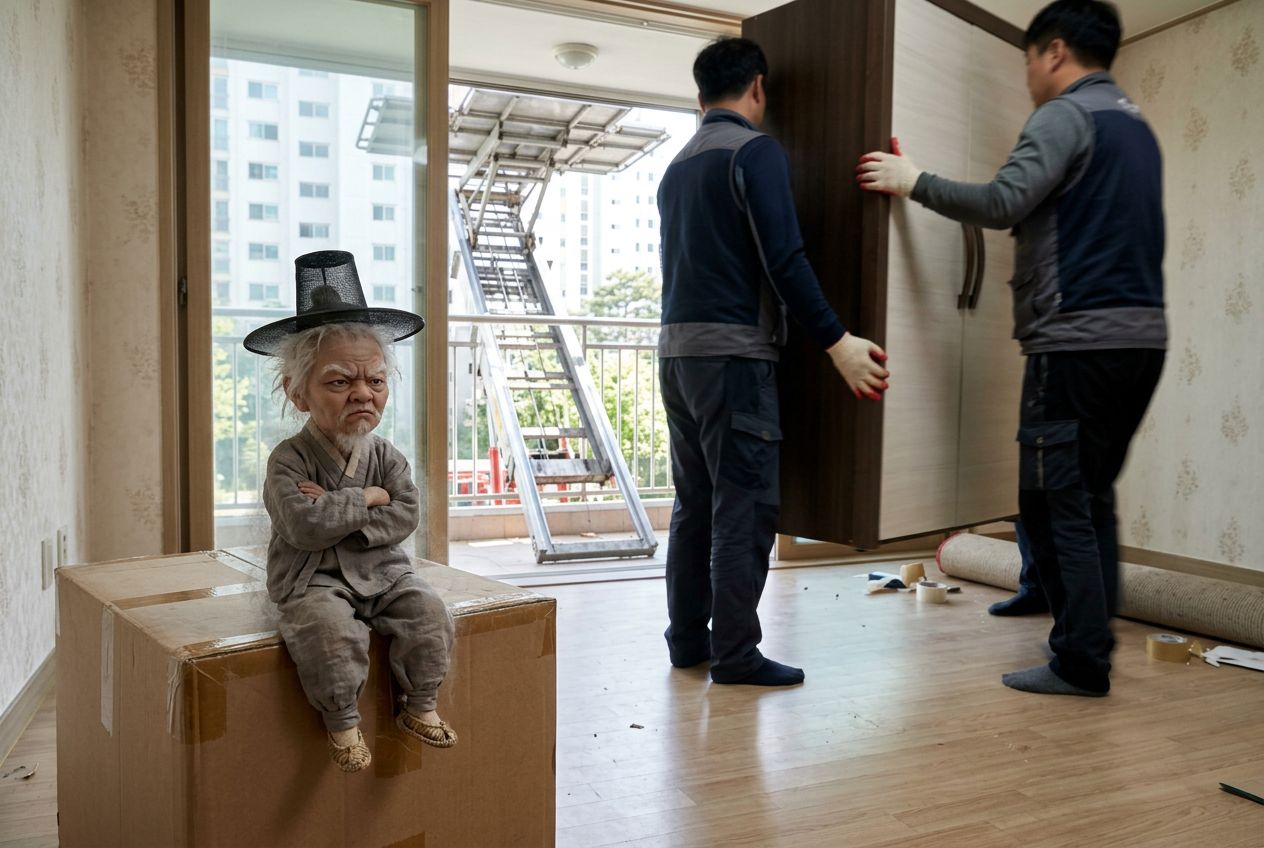
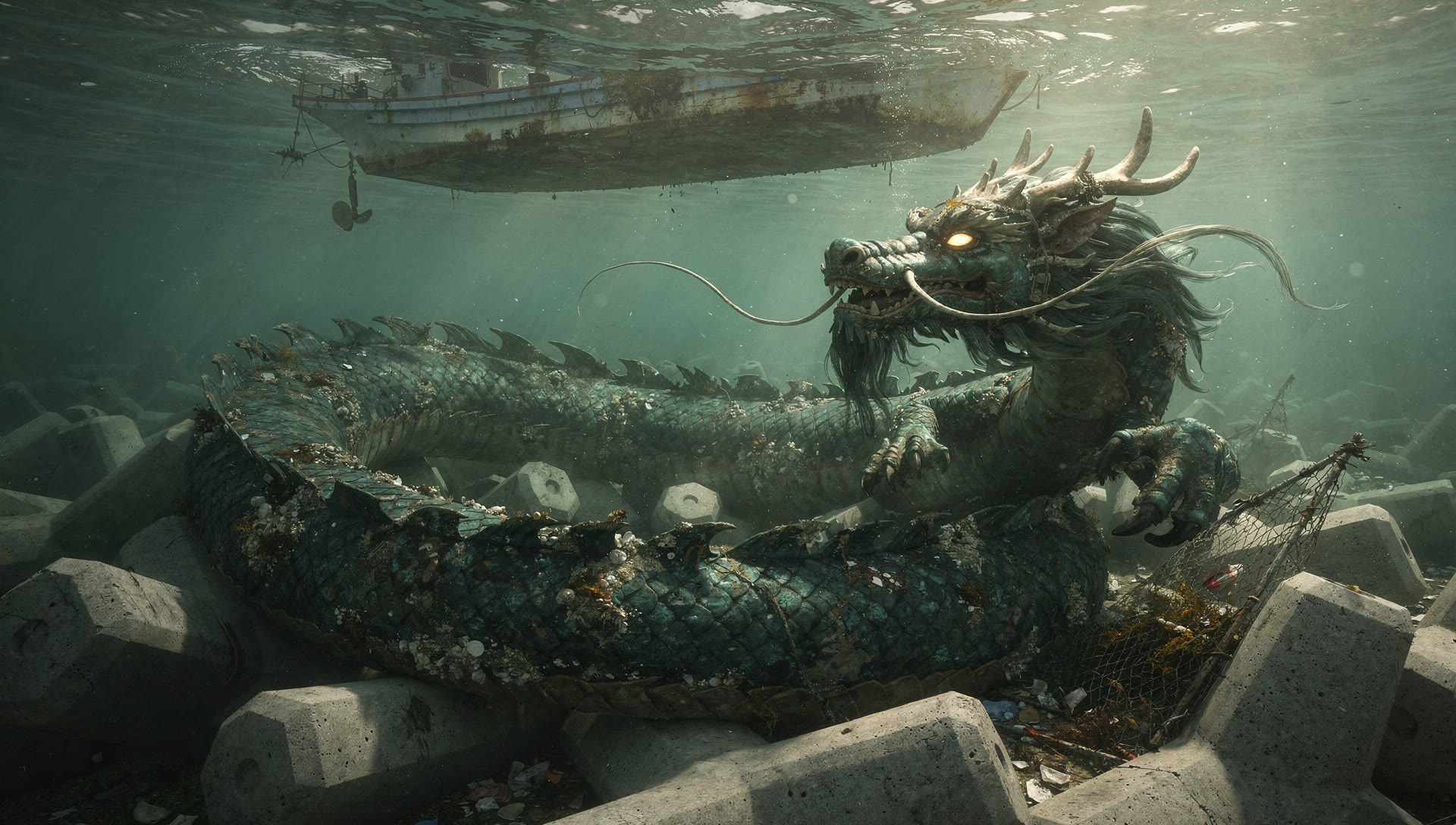
Son, the wandering spirit of Korean folk belief that moves through the four directions on certain days — the reason Koreans choose a "son-less day" to move house (Korean folk belief, Korean traditional clothing and objects, NOT Japanese, NOT Chinese.) — sitting in an emptied Korean apartment on moving day. A small grumpy old spirit about knee height, wispy white hair, a tiny black gat hat and a grey hanbok, sits with arms folded on top of a plain brown cardboard box, glaring at the movers. Two movers in plain work clothes carry a wardrobe past, unaware of him. Bare floor, a rolled-up rug, the platform of a ladder lift truck visible through the open balcony window. Bright daylight. Comic and harmless, not frightening. No text, no letters, no hangul, no readable signs, no logos.
[신들이 아직 여기 있다면] 우사
신들이 아직 여기 있다면
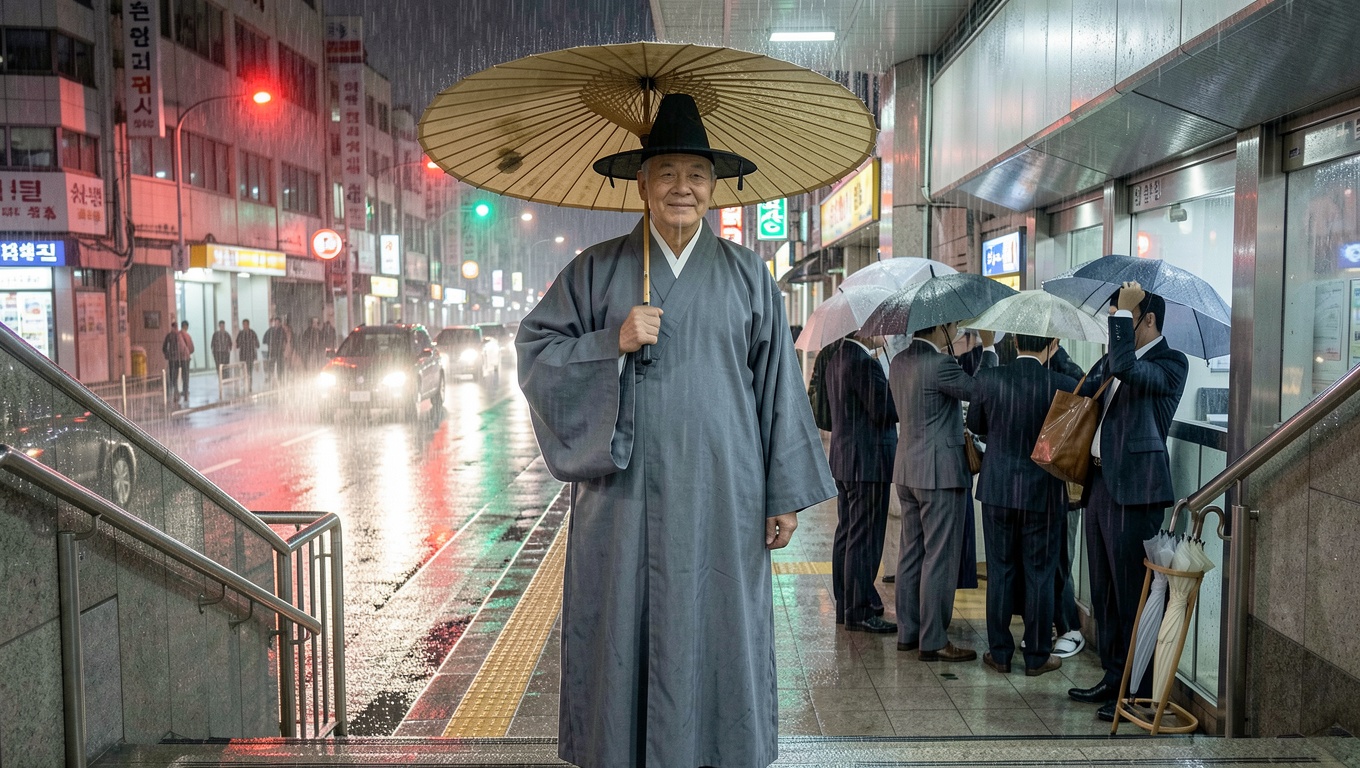
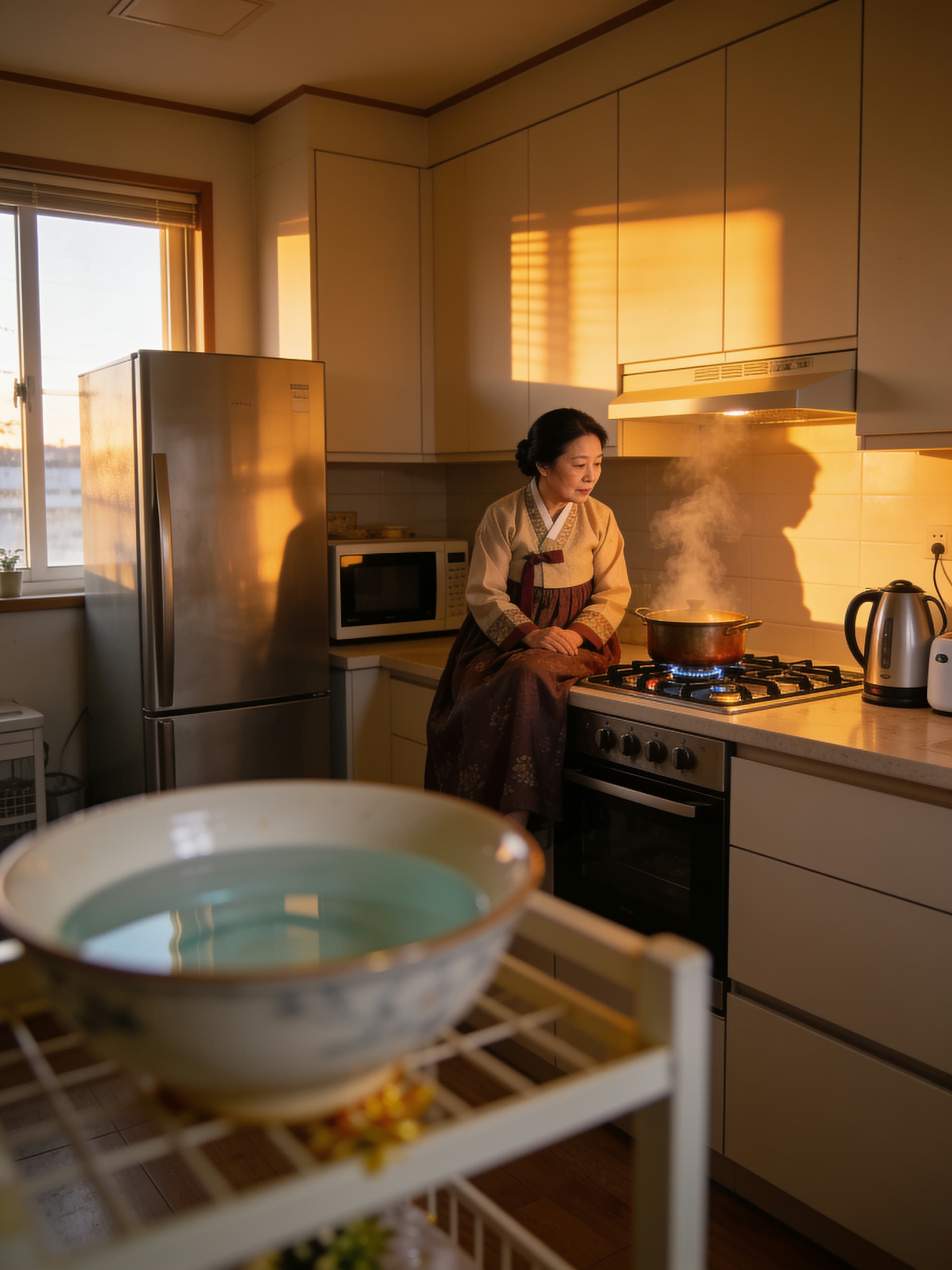
Usa, the master of rain who came down with Hwanung in the Korean founding myth (Korean folk belief, Korean traditional clothing and objects, NOT Japanese, NOT Chinese.), standing at the top of a subway station exit stairway in a Korean city during a sudden summer downpour at night. A tall calm elderly man in a long grey-blue Korean durumagi coat and black gat hat holds an open oiled-paper umbrella of the old Korean style and is completely dry while sheets of rain fall around him. Office workers huddle under the exit canopy holding bags over their heads, a plain umbrella stand beside them. Wet asphalt reflecting red and green traffic lights, rain streaks lit by headlights. He fills about one third of the frame height. Quiet, faintly amused. No text, no letters, no hangul, no readable signs, no logos.
[신들이 아직 여기 있다면] 가믄장아기
신들이 아직 여기 있다면
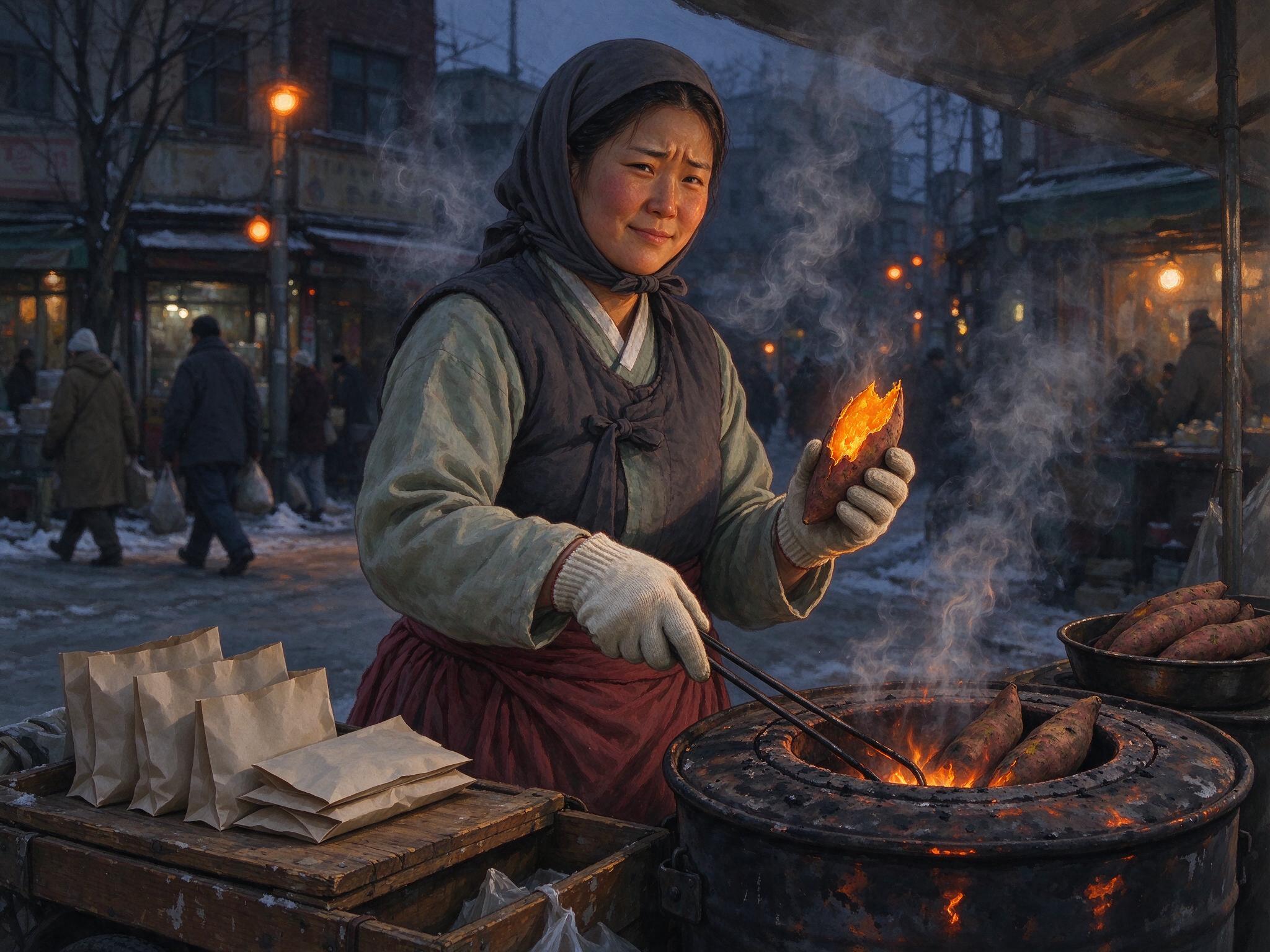
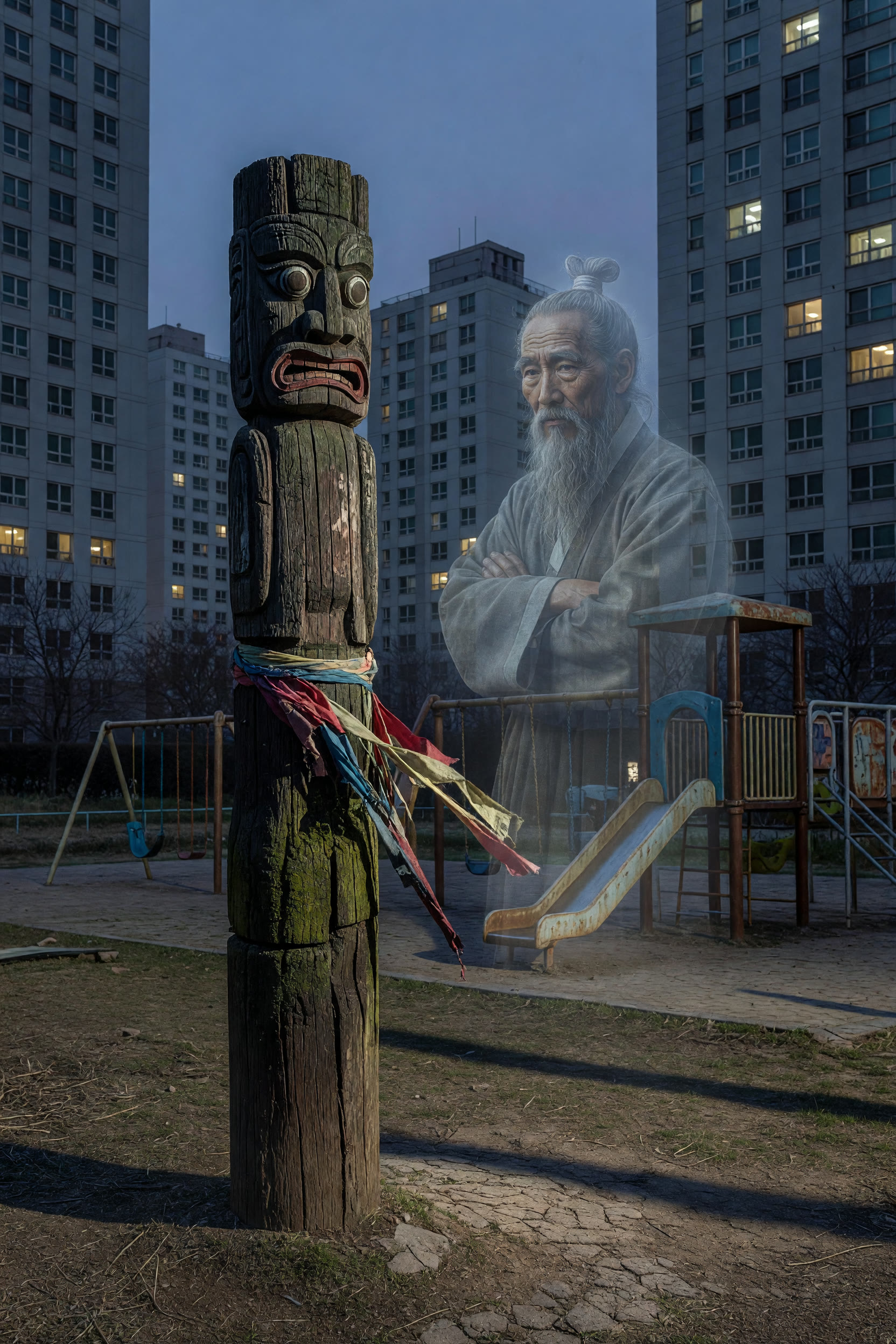
Gamunjang Agi, the Korean goddess of fate who said she lives by her own luck and found gold while digging yams (Korean folk belief, Korean traditional clothing and objects, NOT Japanese, NOT Chinese.), now running a roasted sweet potato stall on a winter street corner at dusk. A sturdy young woman with a plain dark headscarf, a padded vest over a faded hanbok jeogori and cotton work gloves turns sweet potatoes in a black oil-drum roaster with tongs, smoke curling up. One split sweet potato in her hand glows faintly golden inside. Folded paper bags on a plank, an old wooden cart, a few passers-by in winter coats. She fills about half the frame height. Content and self-assured, warm orange light from the drum. No text, no letters, no hangul, no readable signs, no logos.
[신들이 아직 여기 있다면] 하백
신들이 아직 여기 있다면
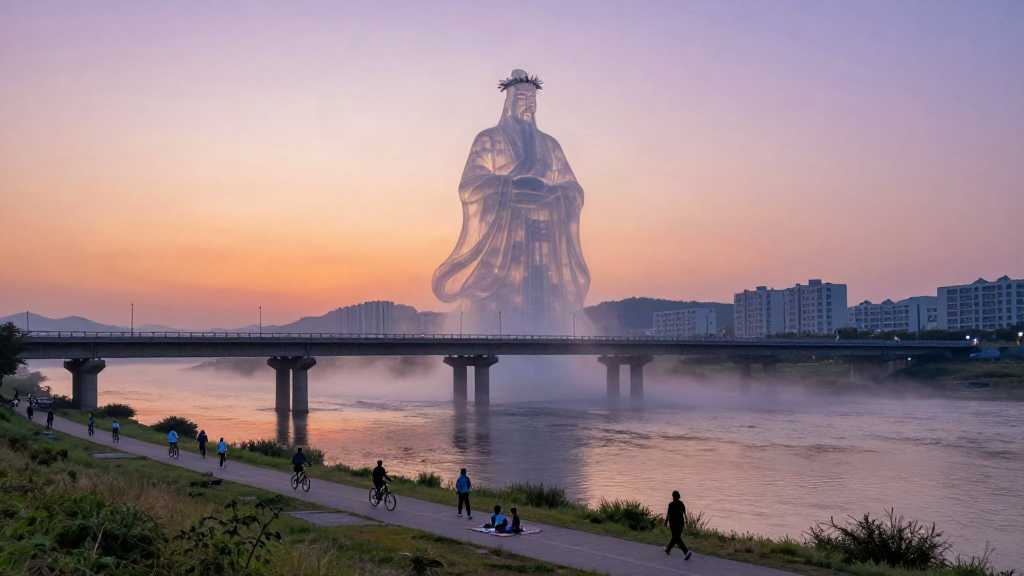
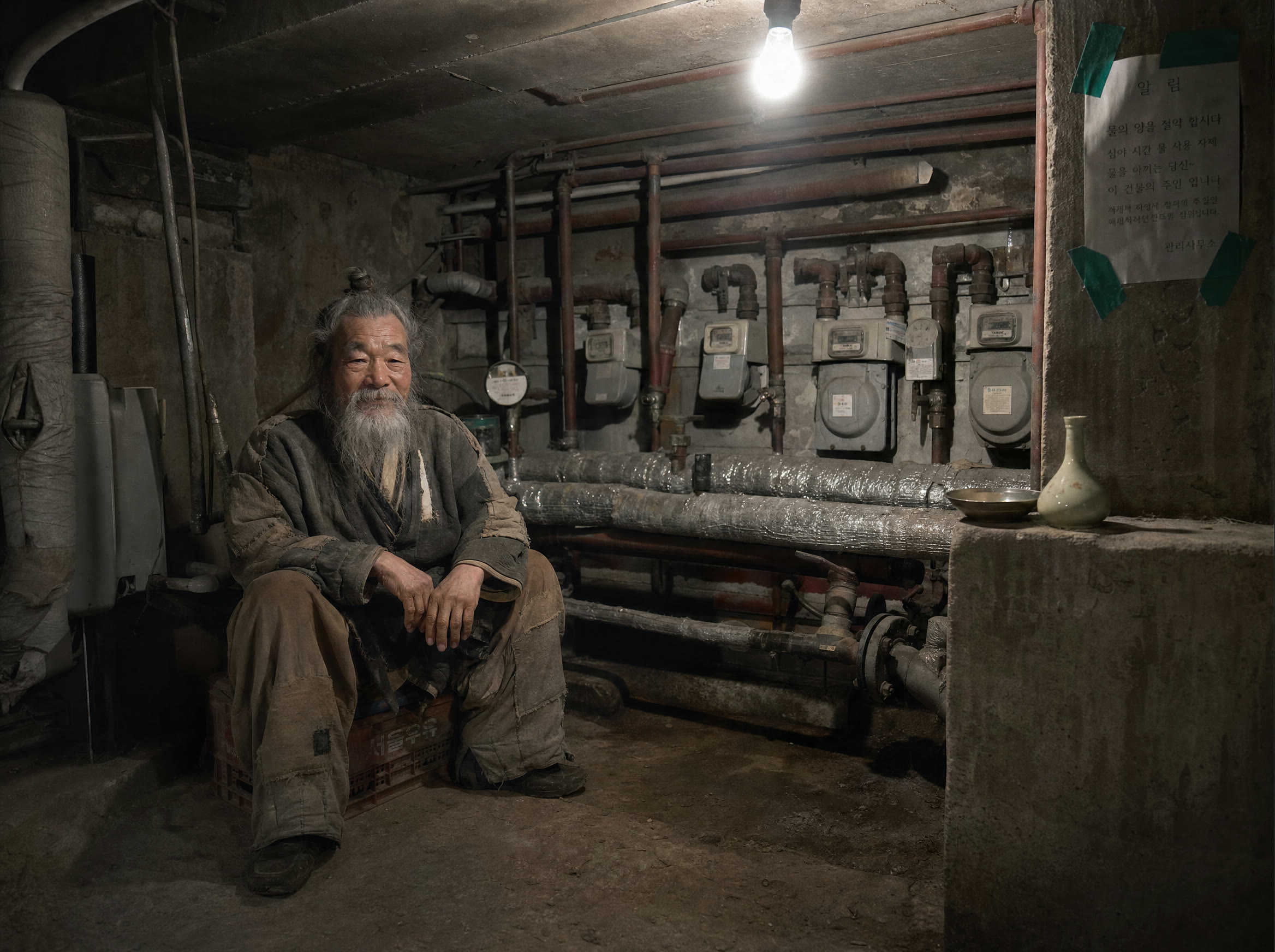
Habaek, the god of the river and father of Lady Yuhwa in the Goguryeo founding myth (Korean folk belief, Korean traditional clothing and objects, NOT Japanese, NOT Chinese.), rising from a wide Korean city river at dusk. An immense translucent old man formed of river water and mist, his body rising from the water to the height of the concrete bridge piers, a long beard flowing downstream, a crown of reeds, seen from the bike path on the riverside park. Below him tiny cyclists, joggers and a family on a picnic mat carry on as usual, each person about one fortieth of the frame height. A plain concrete road bridge without towers, distant generic apartment blocks. Orange and violet afterglow on the water. Majestic and calm. No text, no letters, no hangul, no readable signs, no logos.
[신들이 아직 여기 있다면] 세오녀
신들이 아직 여기 있다면
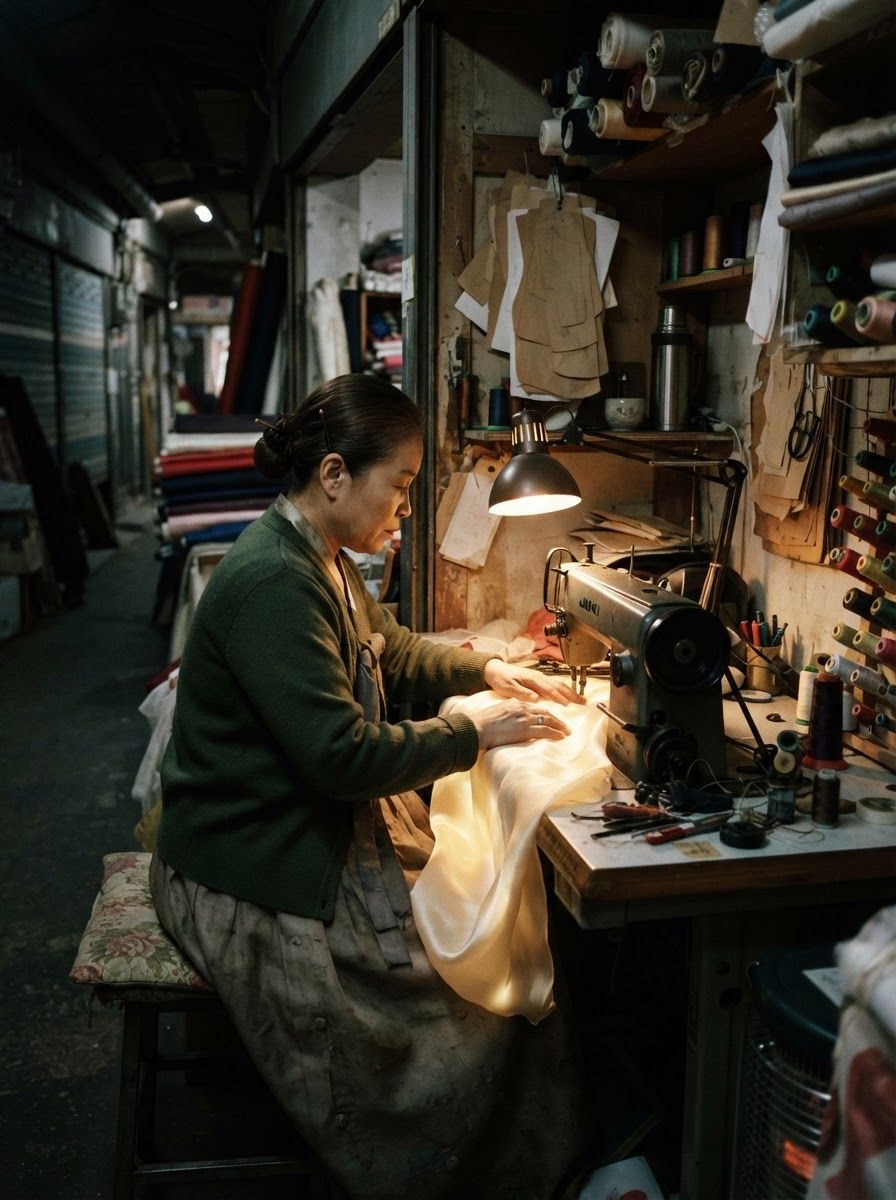
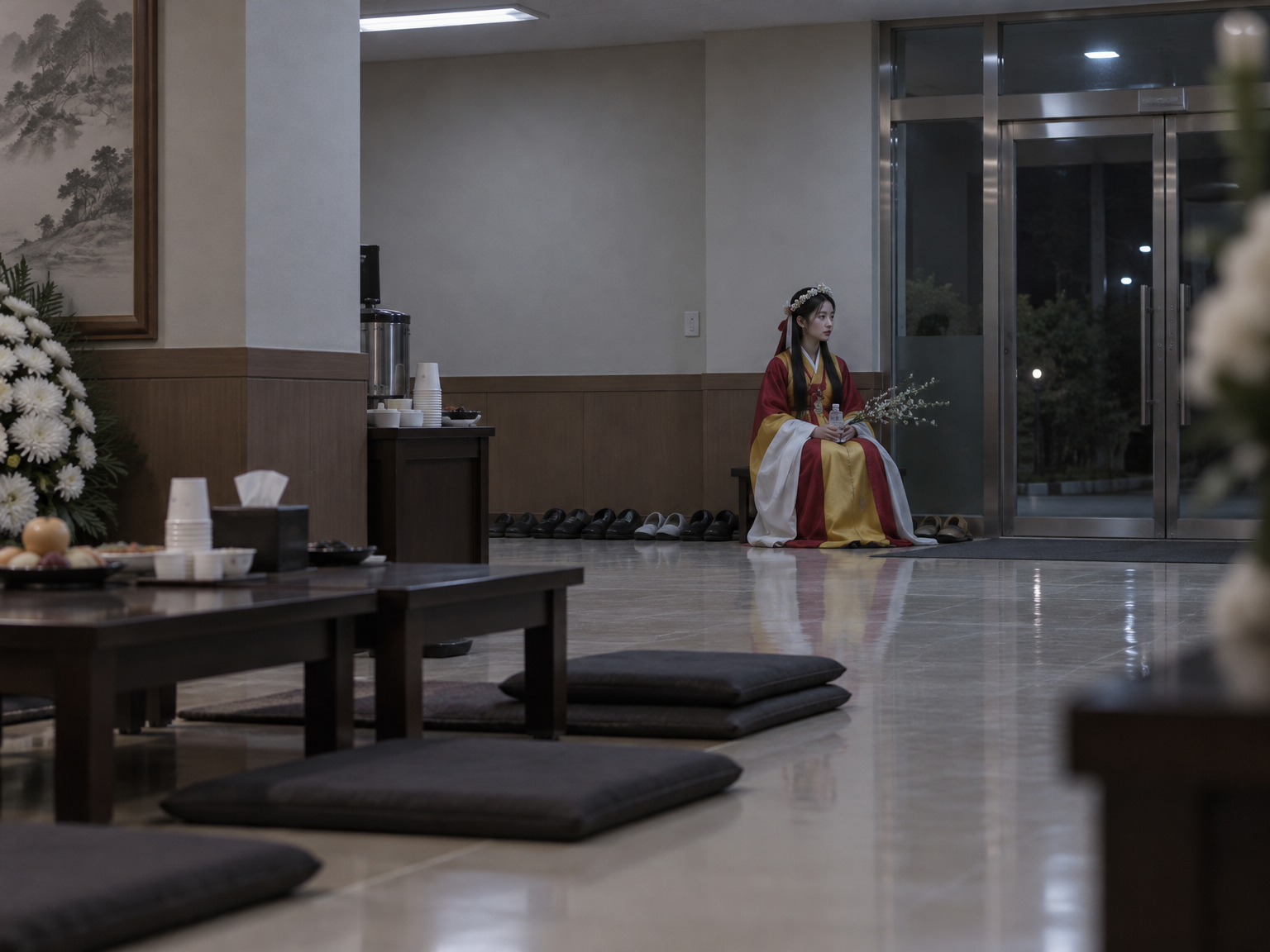
Seonyeo, the weaver of the Korean legend of Yeonorang and Seonyeo, whose woven silk brought back the light of the sun and moon (Korean folk belief, Korean traditional clothing and objects, NOT Japanese, NOT Chinese.), working late at night in a tiny sewing workshop inside an old Korean fabric market building. A middle-aged woman in a plain cardigan over an old-style hanbok skirt sits at an industrial sewing machine under a single desk lamp, feeding through a length of pale silk that glows softly golden like morning sunlight, lighting her face and the shelves. Around her: stacked bolts of plain fabric, spools of thread, paper patterns pinned to the wall, a thermos, a cushion on her stool. Dark corridor outside. She fills about half the frame height. No text, no letters, no hangul, no readable signs, no logos.
[신들이 아직 여기 있다면] 자청비
신들이 아직 여기 있다면
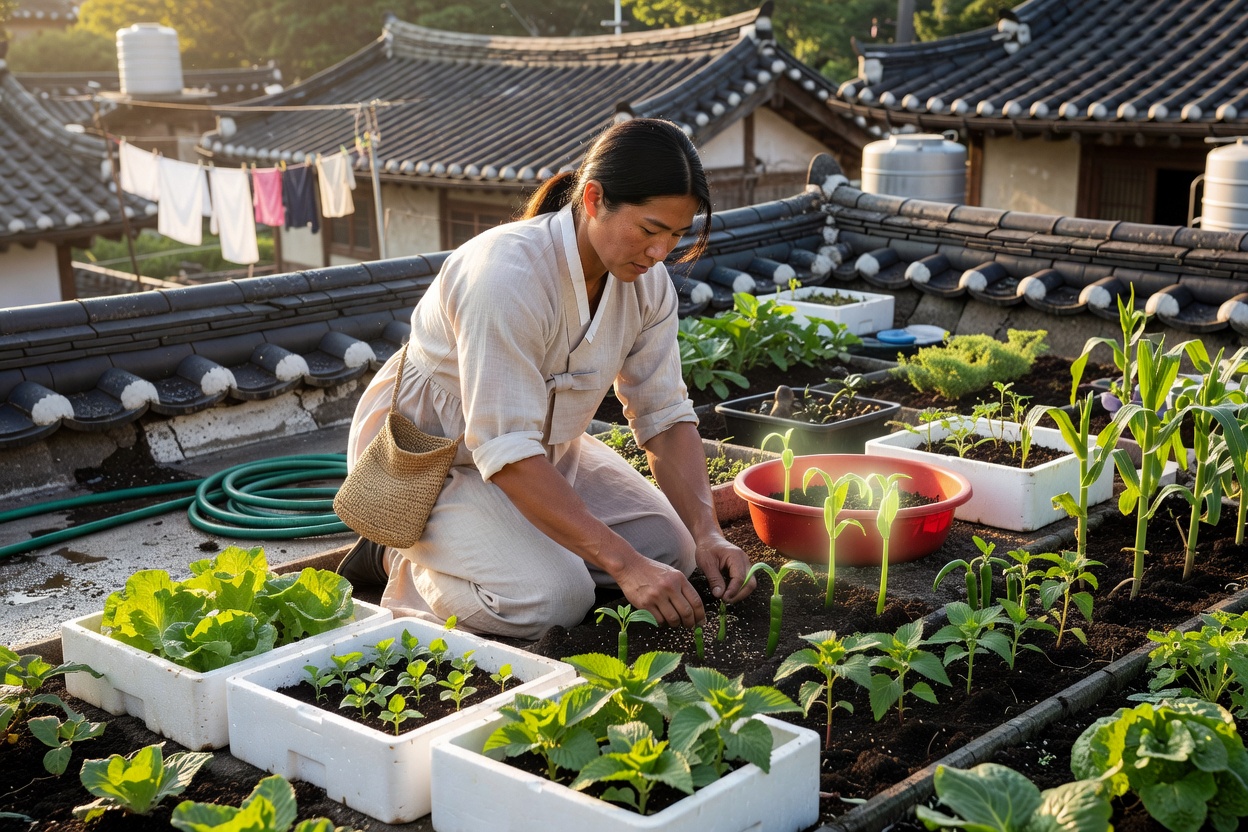
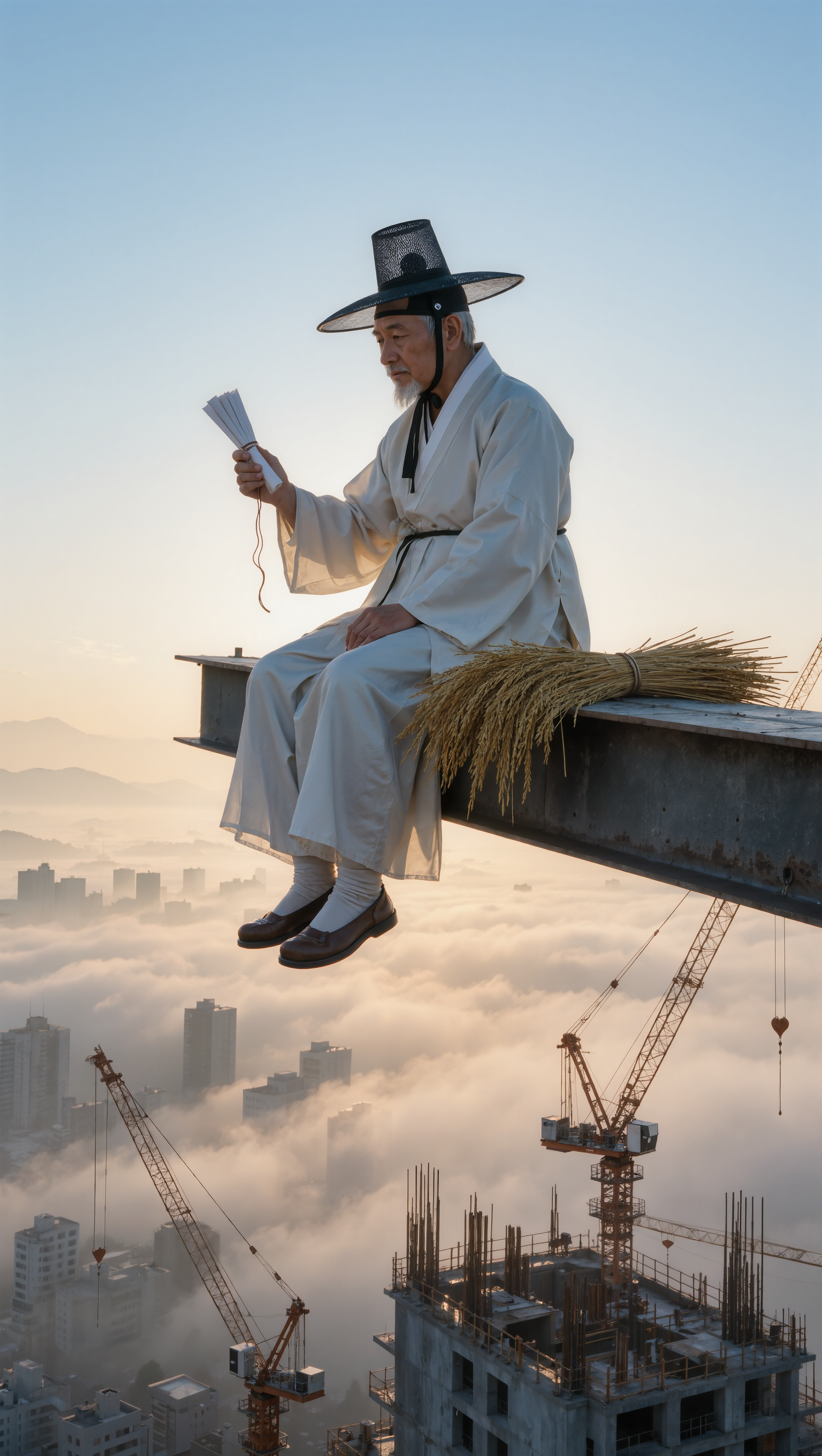
Jacheongbi, the Jeju goddess of farming who brought the five grains down from heaven (Korean folk belief, Korean traditional clothing and objects, NOT Japanese, NOT Chinese.), in a rooftop vegetable garden on an old Korean villa building in early summer. A strong young woman in a plain ramie hanbok with her sleeves tied back and a woven seed pouch at her hip kneels between styrofoam boxes and rubber basins planted with lettuce, perilla, chilli and corn, pressing seeds into the soil with her fingers. Plain unprinted styrofoam boxes, a green garden hose, a red rubber basin, laundry drying behind, neighbouring rooftops with water tanks. Morning sun. The seedlings her hand has touched stand a little taller and greener. She fills about half the frame height. No text, no letters, no hangul, no readable signs, no logos.
[신들이 아직 여기 있다면] 오늘이
신들이 아직 여기 있다면
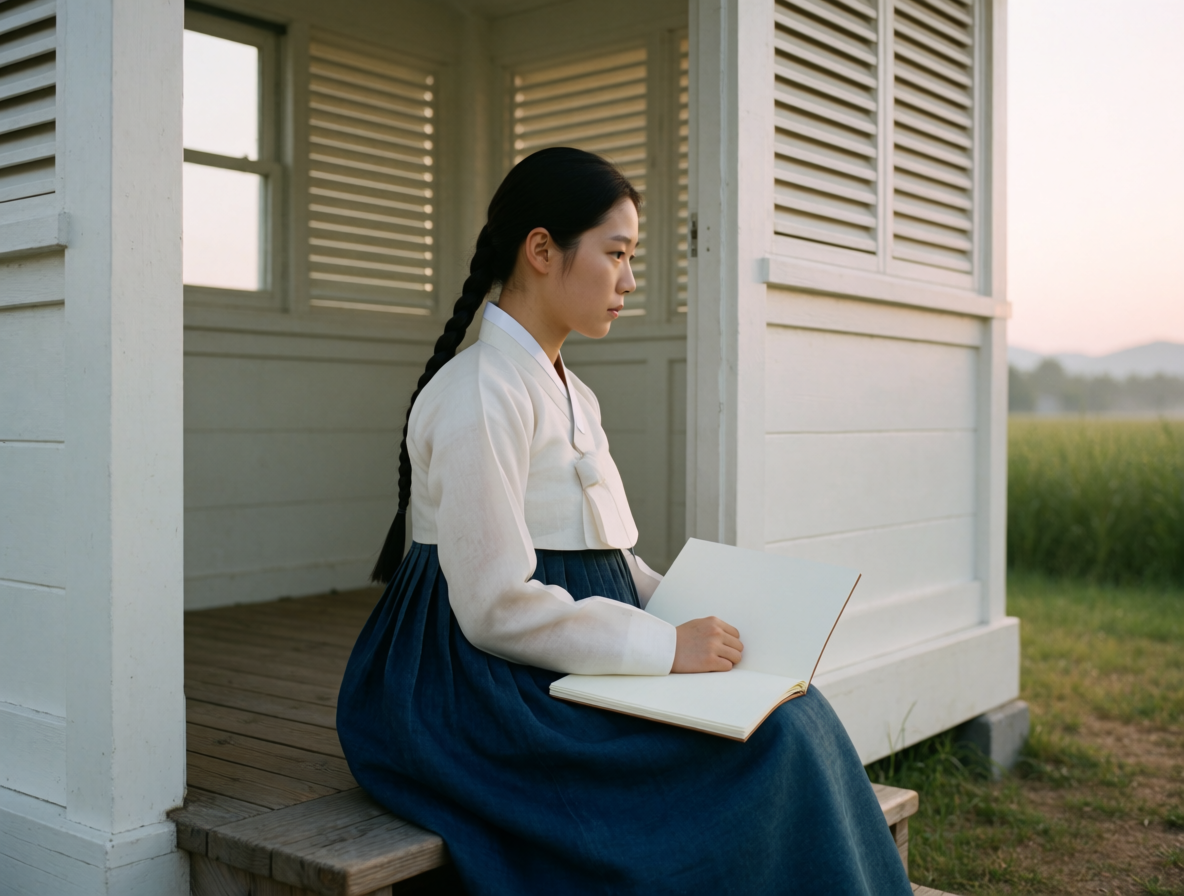
Oneuri, the orphan girl of Korean shamanic myth who travelled to Woncheongang, the land where the four seasons are kept, and became the goddess who keeps them (Korean folk belief, Korean traditional clothing and objects, NOT Japanese, NOT Chinese.), at a small rural weather observation station at dawn. A young woman with a long single braid in a plain white and indigo hanbok sits on the step of a white louvered instrument shelter, a blank open notebook on her knees, a bundle tied in cloth beside her. On the lawn around her: a rain gauge, a wind vane, a thermometer mast. Behind her one tree whose branches show spring blossom on the left, green summer leaves in the middle, red autumn leaves and bare winter twigs on the right. Pale dawn light. She fills about half the frame height. No text, no letters, no hangul, no readable signs, no logos.
[신들이 아직 여기 있다면] 문전신
신들이 아직 여기 있다면
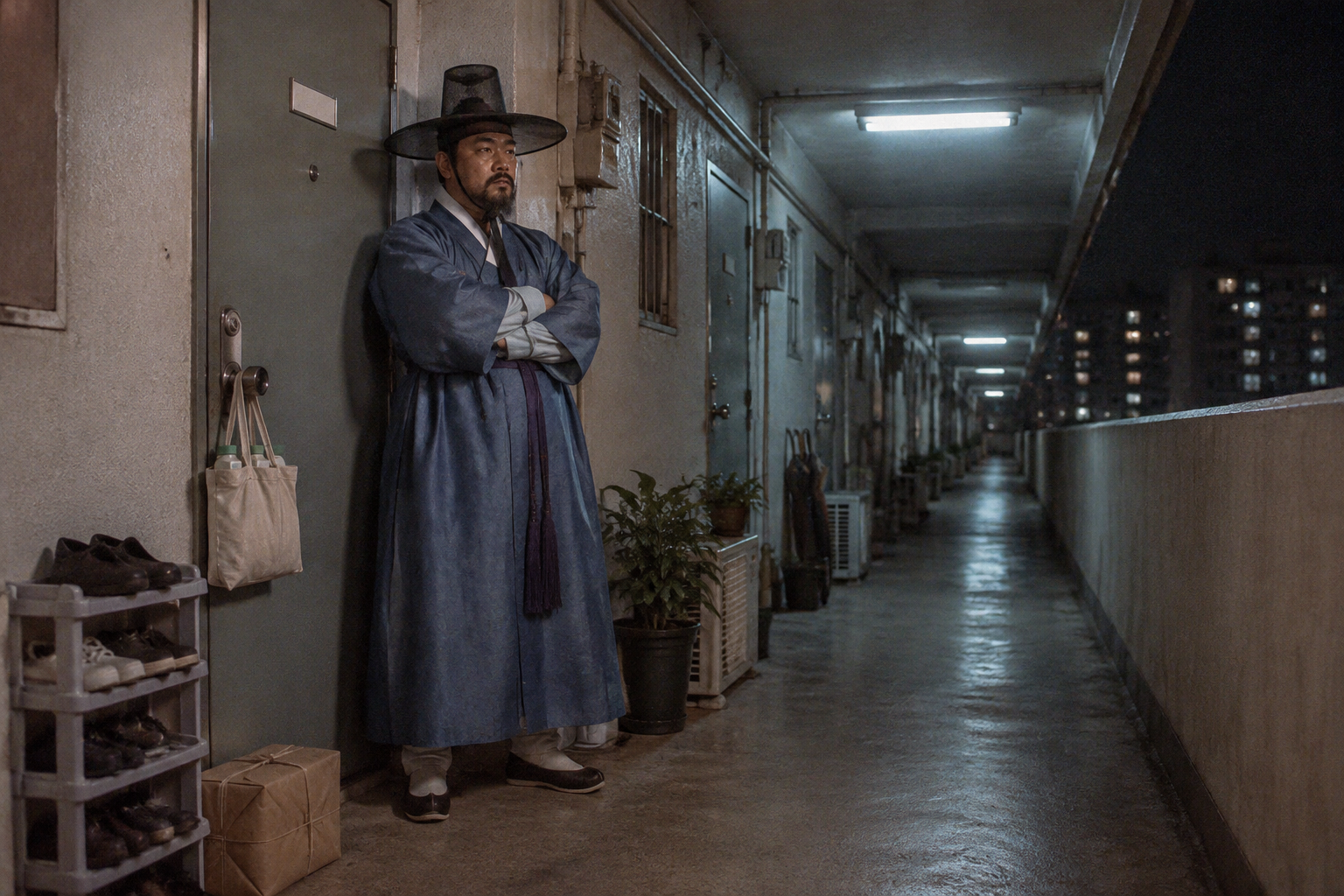
Munjeonsin, the Korean god of the front door who decides what may enter a home (Korean folk belief, Korean traditional clothing and objects, NOT Japanese, NOT Chinese.), in the open-air corridor of an old 1990s Korean apartment block at night, shot on grainy colour negative film. A broad-shouldered middle-aged man in a faded blue hanbok and black gat hat stands with his back against a steel apartment front door, arms folded, like a doorman on duty. Beside him: a cloth milk-delivery bag hanging on the door handle, a plastic shoe rack, a potted plant, a parcel in plain brown paper. A single fluorescent tube lights the long corridor, identical doors receding into the distance. The door number plates are blank. He fills about half the frame height. Steady and protective. No text, no letters, no hangul, no readable signs, no logos.
[신들이 아직 여기 있다면] 꽃감관
신들이 아직 여기 있다면
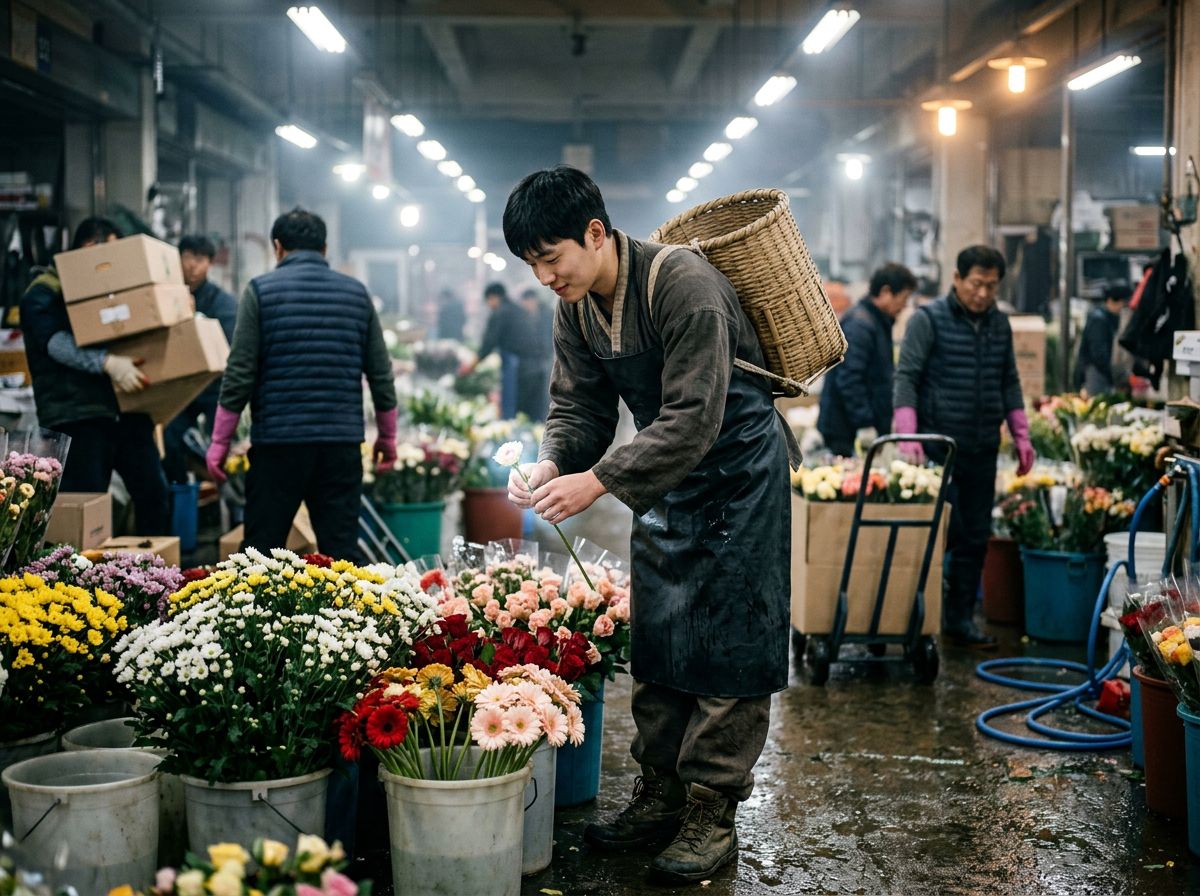
The flower keeper of Seocheon Kkotbat, the garden at the edge of the underworld where the flowers that revive the dead grow, from Korean shamanic myth (Korean folk belief, Korean traditional clothing and objects, NOT Japanese, NOT Chinese.), working at a wholesale flower market before dawn. A young man in a plain hanbok with a rubber apron over it and a woven basket on his back stands among buckets of chrysanthemums, roses and gerberas, carefully lifting out one small flower that glows softly white among the ordinary ones. Florists in padded vests haul plain cardboard boxes past him, a hand cart, wet concrete floor, bare fluorescent lights, plain plastic buckets. He fills about half the frame height. Gentle and attentive. No text, no letters, no hangul, no readable signs, no logos.