전체 작품
놀이터에 게시된 모든 공개 작품을 최신순으로 둘러보세요· 37페이지
[없는 문명] 세 사람이 마시는 잔
없는 문명
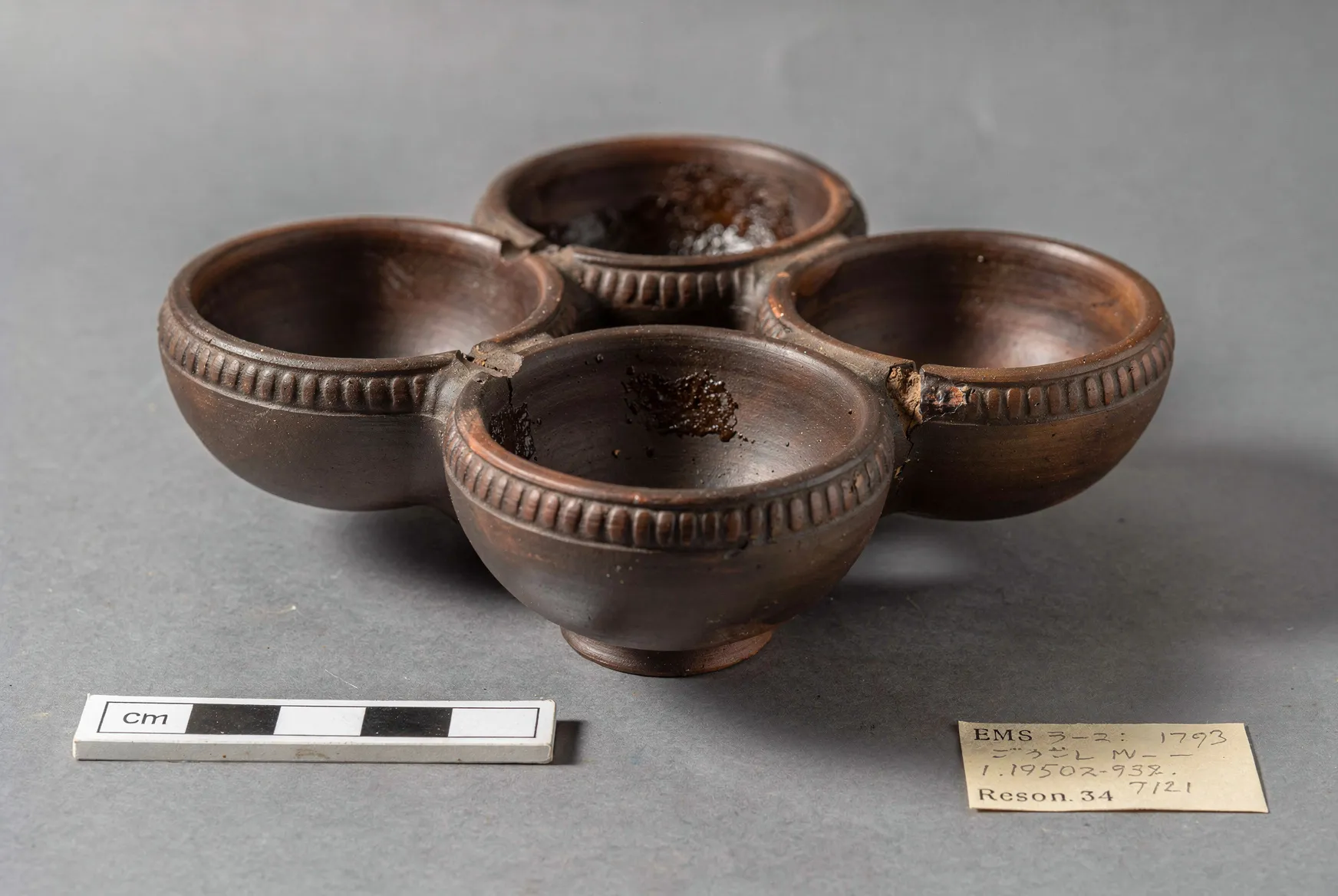
Museum catalogue photograph of a shared drinking vessel from a civilisation that never existed: three small round ceramic cups fused together on a single shared foot, each bowl tilted outward in a different direction so three people would have to drink at once facing each other, connected by a small internal channel so the liquid level is shared. Burnished dark brown slip, a band of impressed fingertip marks around each rim, a residue stain inside one bowl. One bowl rim is repaired with old resin. Neutral grey seamless background, raking light from the left, a black-and-white scale bar and a small accession card beside the object with no legible writing on it. Archaeological museum catalogue documentation style. No readable text, no letters, no numbers, no logos.
[신들이 아직 여기 있다면] 칠성신
신들이 아직 여기 있다면
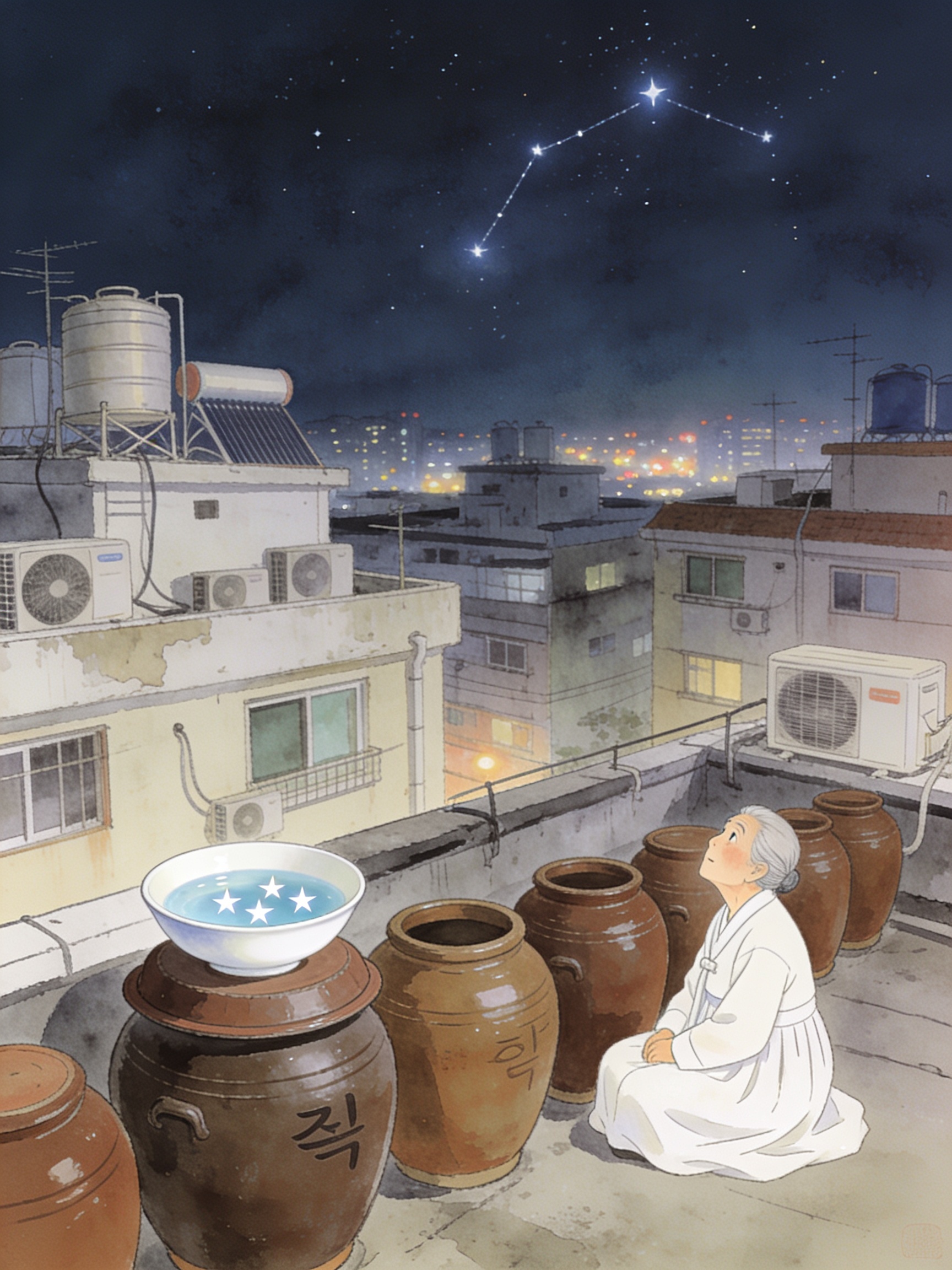
Chilseongsin, the Korean deity of the Big Dipper who watches over long life (Korean folk belief, Korean traditional clothing and objects, NOT Japanese, NOT Chinese.), on the rooftop of an old Korean apartment building at night. Among air-conditioner units and water tanks stand a row of brown earthenware jangdok jars, and on one lid sits a white porcelain bowl of clean water as an offering, reflecting seven bright stars. An old figure in a white hanbok sits beside the jars looking up. Above, the seven stars of the Big Dipper shine unnaturally bright through the city glow. The upper half of the frame is night sky, the figure fills about one fifth of the frame height. Serene. No text, no letters, no hangul, no readable signs, no logos.
[없는 문명] 누름 식물 책
없는 문명
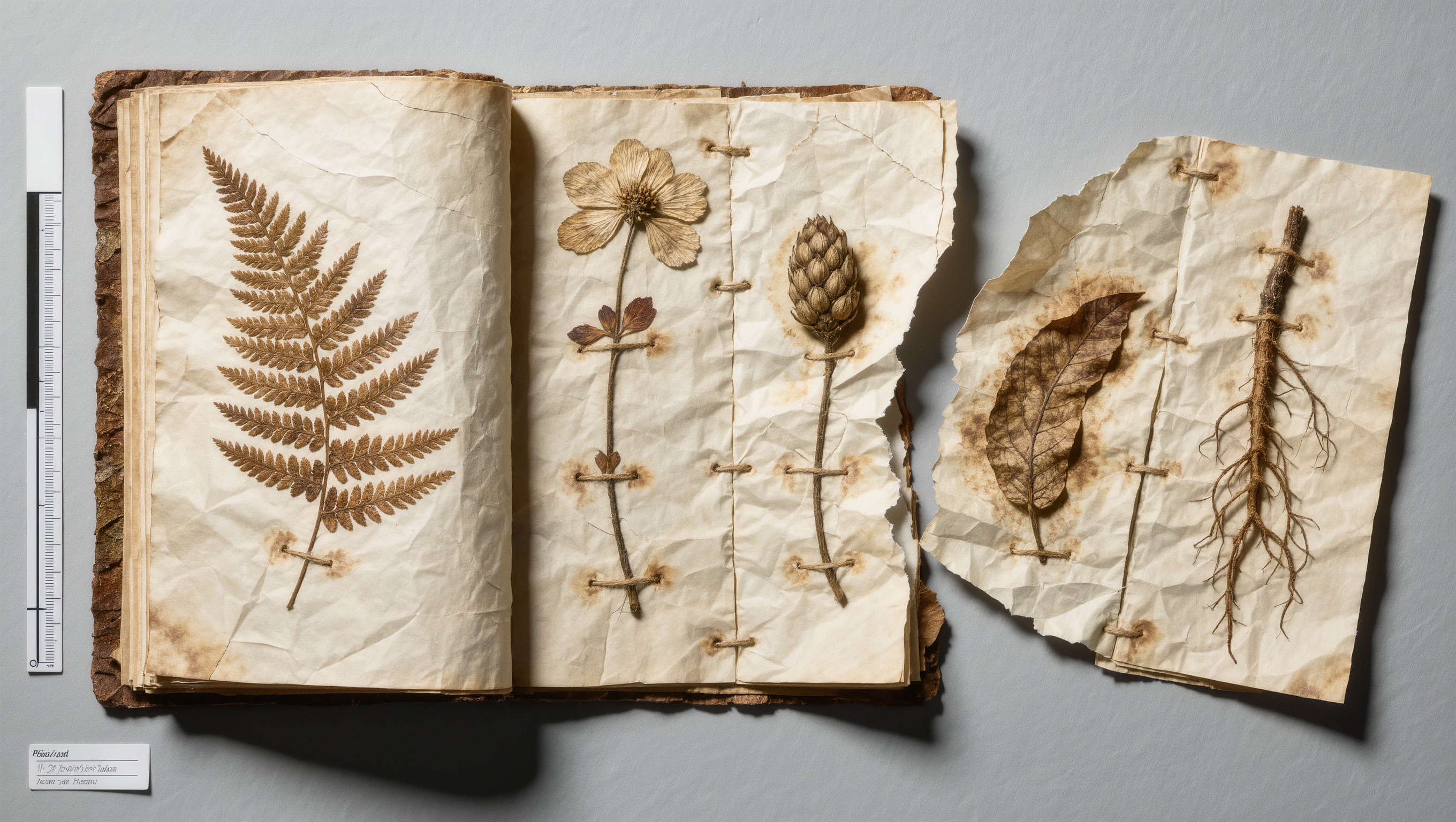
Museum catalogue photograph of a pressed-plant book from a civilisation that never existed: an accordion-folded book of thin beaten bark paper, partly unfolded to show five panels, each panel holding a single pressed and dried plant — a fern frond, a flowering stem, a seed head, a curled leaf, a root — held in place with tiny stitches of plant fibre, faint rust-brown stains around each specimen. No writing on any page. The fold creases are cracked and one panel is torn halfway. Neutral grey seamless background, raking light from the left, a black-and-white scale bar and a small accession card beside the object with no legible writing on it. Archaeological museum catalogue documentation style. No readable text, no letters, no numbers, no logos.
[신들이 아직 여기 있다면] 해태
신들이 아직 여기 있다면
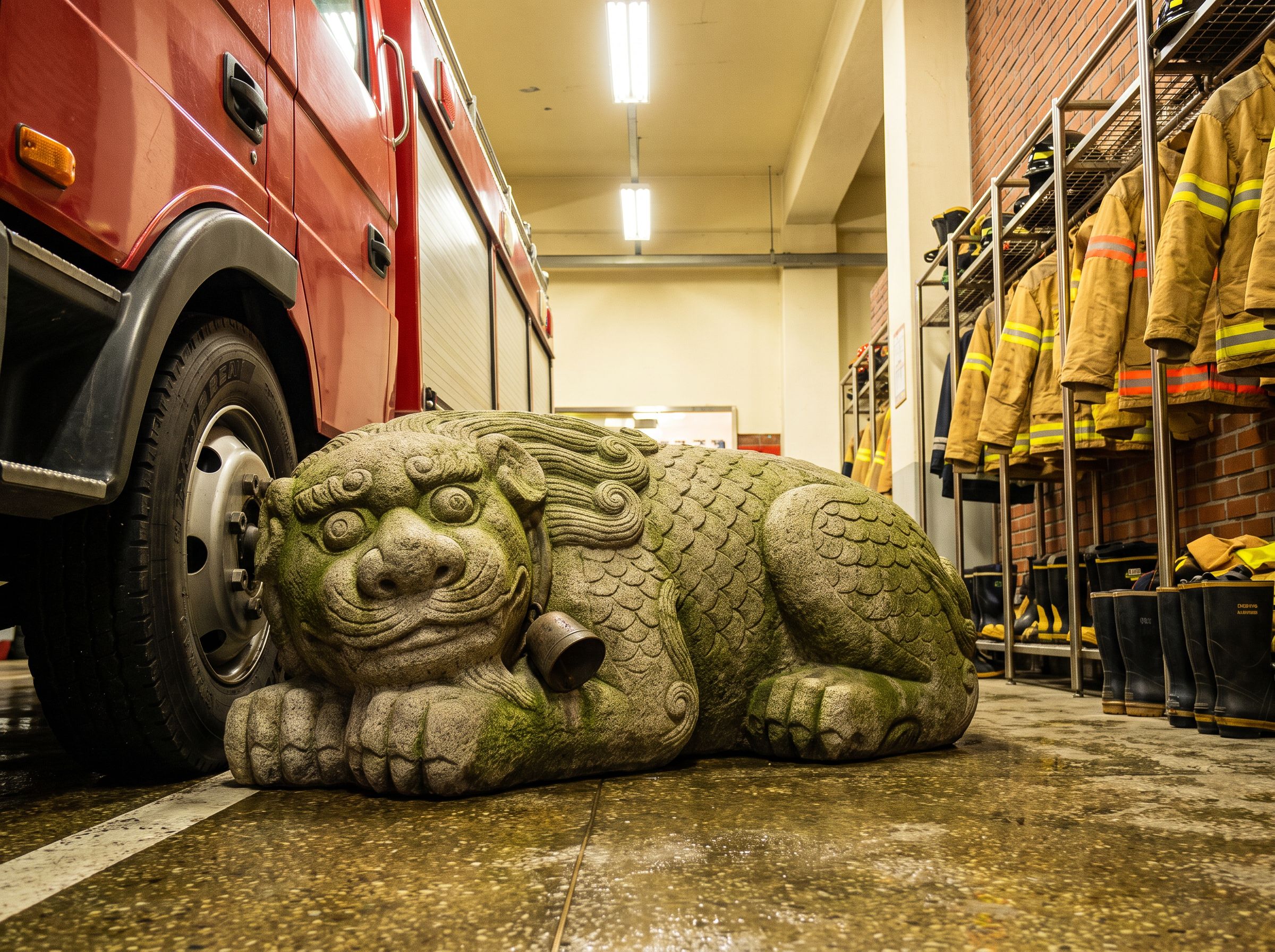
A Korean haetae, the mythical guardian beast that protects against fire (Korean folk belief, Korean traditional clothing and objects, NOT Japanese, NOT Chinese.): a stocky granite creature with a curly carved mane, round bulging friendly eyes, a scale pattern over its body and a small bell on its chest — NOT a Chinese guardian lion, NOT a Japanese komainu. It has quietly come alive and lies curled up like a big old dog on the floor of a Korean fire station garage, beside the front wheel of a red fire engine with no markings, its stone chin resting on its paws. Firefighters' boots and folded turnout gear stand ready by the wall. Fluorescent light, glossy concrete floor. Warm and slightly comic. No text, no letters, no hangul, no readable signs, no logos.
[신들이 아직 여기 있다면] 서낭신
신들이 아직 여기 있다면
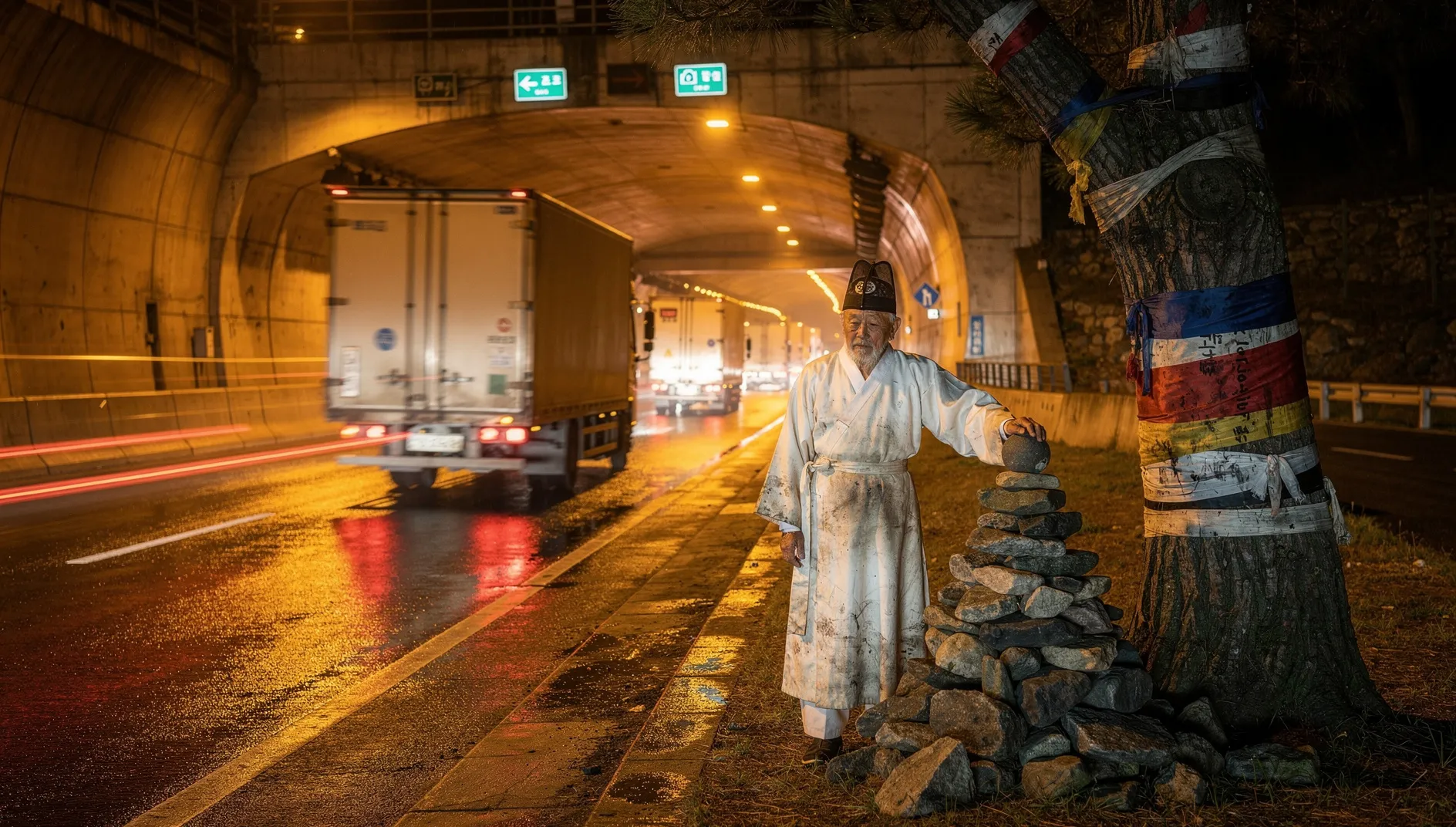
Seonangsin, the Korean guardian spirit of mountain passes (Korean folk belief, Korean traditional clothing and objects, NOT Japanese, NOT Chinese.), at the mouth of a highway tunnel at night. Beside the hard shoulder stands an old seonangdang shrine tree wrapped with faded cloth strips in the five Korean obangsaek colours (blue, red, yellow, white, black) and a cairn of piled stones. A tall elderly figure in a worn white Korean durumagi coat and black gat hat stands by the cairn with one hand resting on it, watching the trucks pass, his outline faintly luminous. Orange sodium tunnel lights, red tail-light streaks from long exposure, wet asphalt. The figure fills about one quarter of the frame height. Watchful and calm, not threatening. No text, no letters, no hangul, no readable signs, no logos.
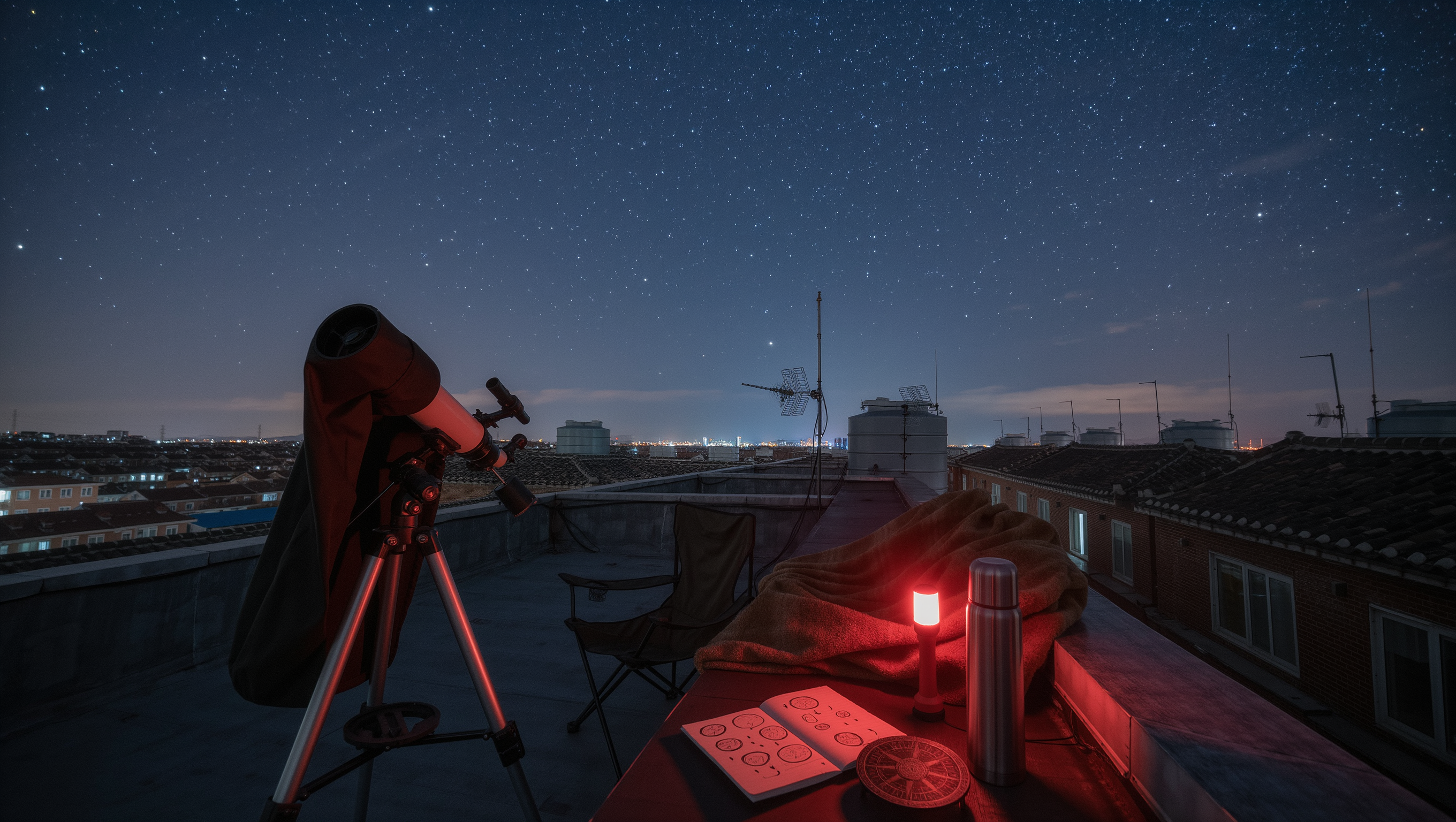
[없는 문명] 하늘 거울
없는 문명
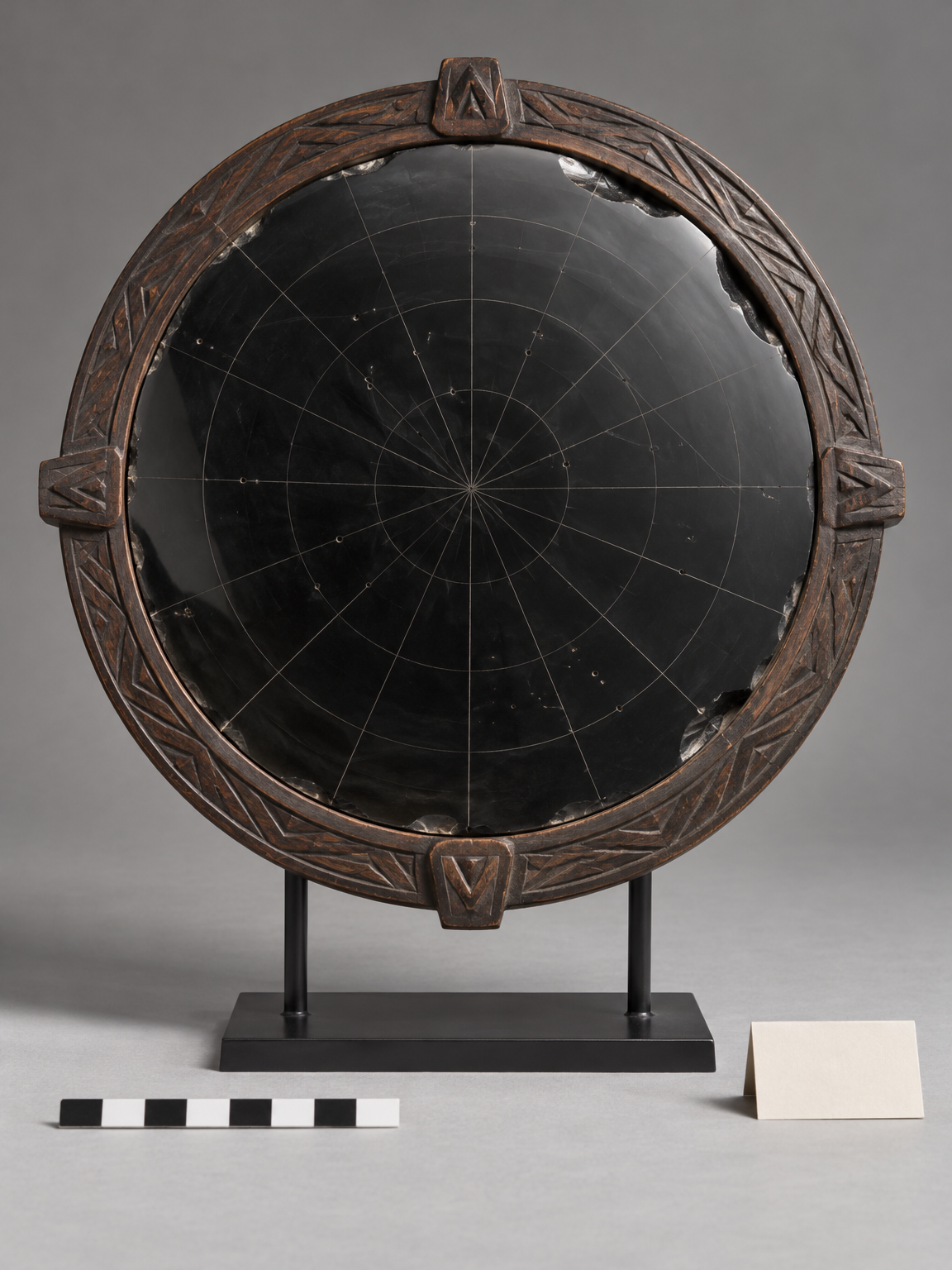
Museum catalogue photograph of a sky mirror from a civilisation that never existed: a round disc of polished black obsidian the size of a dinner plate, set in a frame of carved dark wood, its glossy face finely scratched with a grid of fine lines and a few tiny drilled dots, as if used to track the positions of stars reflected in it. The polished surface reflects only the grey studio. Small chips around the edge of the stone. Displayed upright on a museum stand. Neutral grey seamless background, raking light from the left, a black-and-white scale bar and a small accession card beside the object with no legible writing on it. Archaeological museum catalogue documentation style. No readable text, no letters, no numbers, no logos.