전체 작품
놀이터에 게시된 모든 공개 작품을 최신순으로 둘러보세요· 39페이지
[신들이 아직 여기 있다면] 바리공주
신들이 아직 여기 있다면
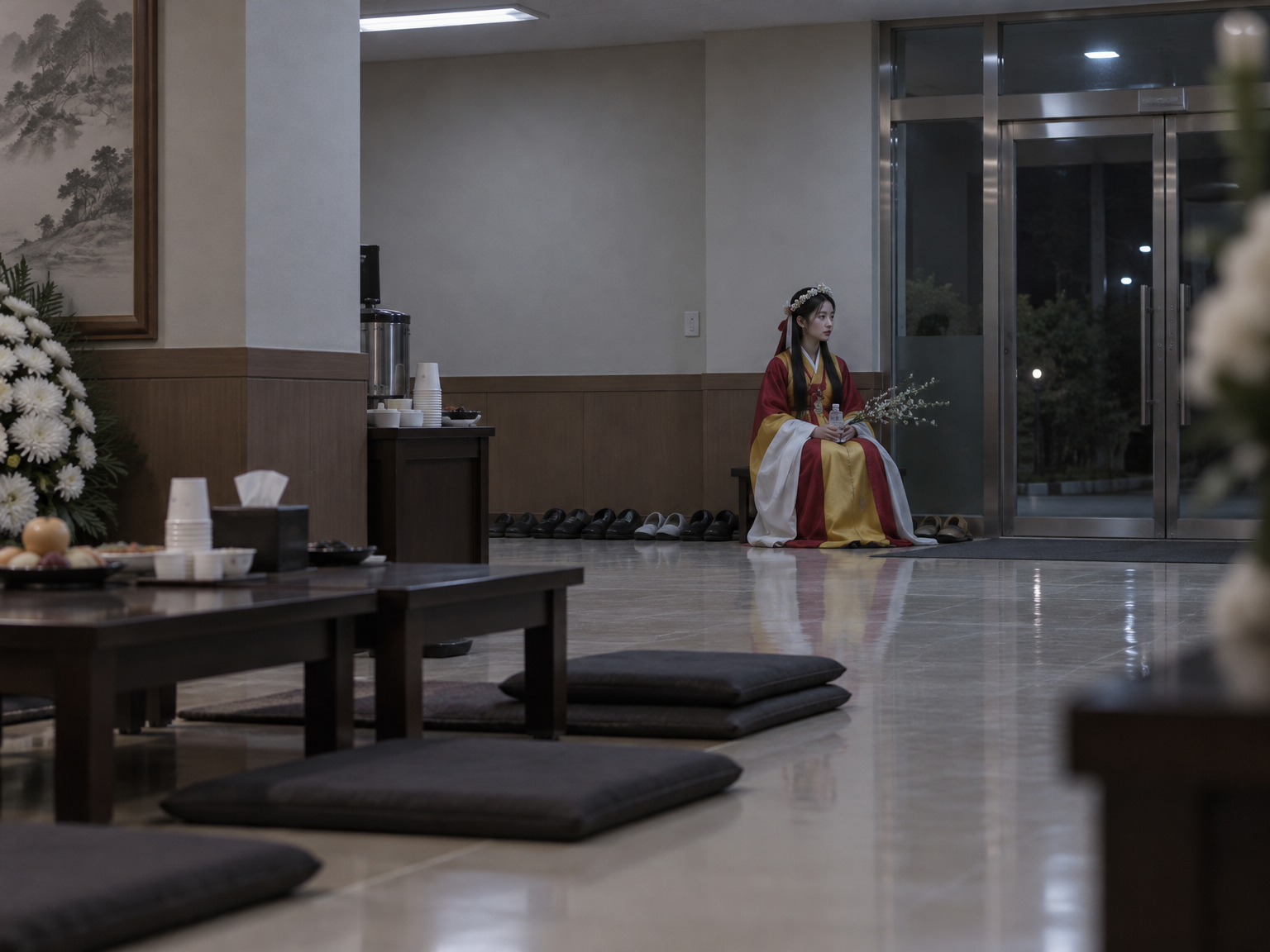
Bari Gongju, the abandoned princess of Korean shamanic myth who became the guide of the dead (Korean folk belief, Korean traditional clothing and objects, NOT Japanese, NOT Chinese.), in the family lounge of a Korean funeral hall at 3 AM. A young woman in a Korean shaman's ceremonial robe of red and yellow with long white sleeves and a small flower crown sits quietly at the end of a row of mourners' slippers by the door, holding a small bottle of clear spring water and a flowering willow branch on her lap, waiting to accompany someone. Low tables, folded mourning cushions, a stack of paper cups, fluorescent light. She is seen at a distance, filling about one third of the frame height. Gentle and patient, not frightening. No text, no letters, no hangul, no readable signs, no logos.
[없는 문명] 규칙을 모르는 놀이판
없는 문명
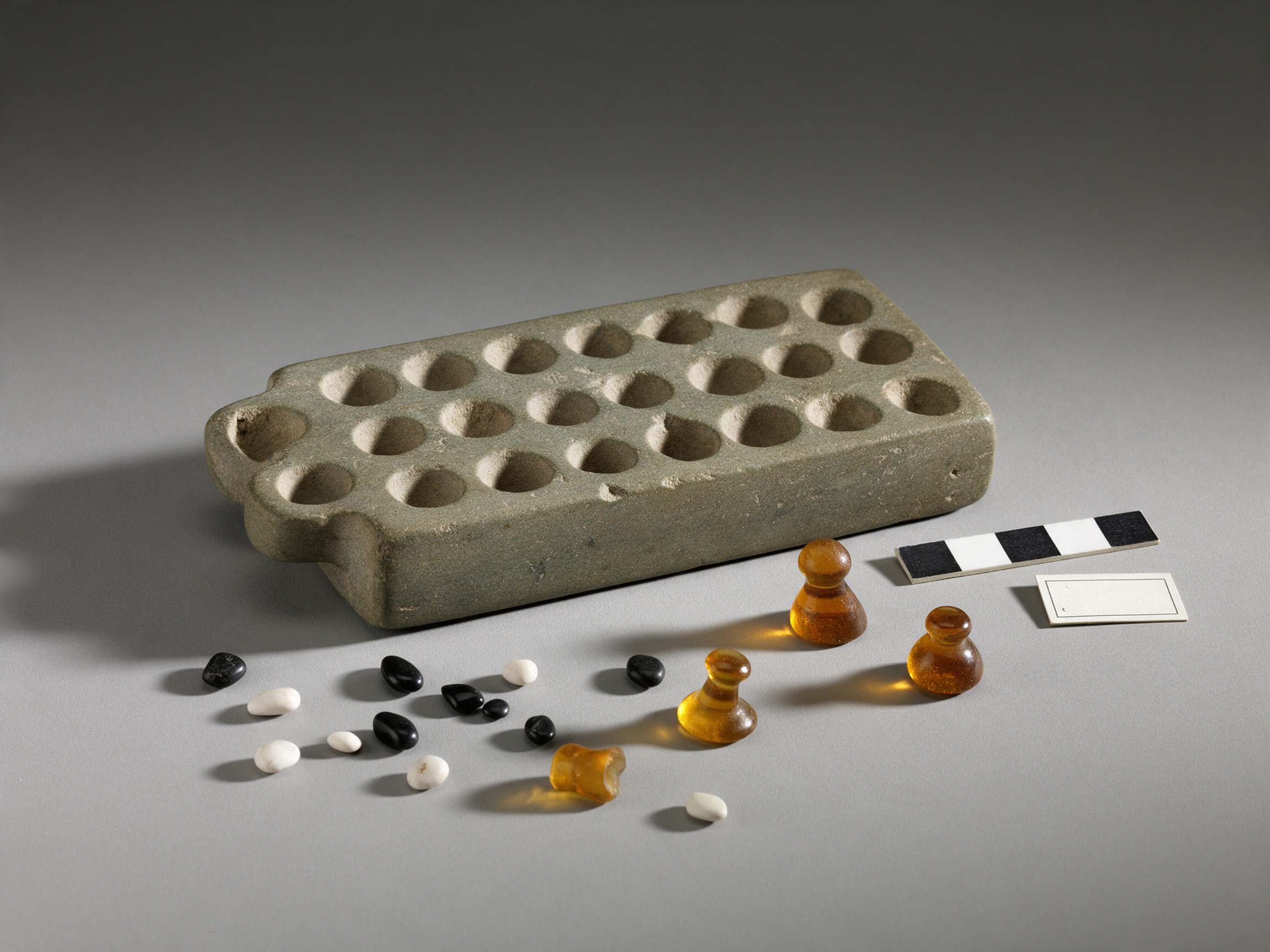
Museum catalogue photograph of a game board from a civilisation that never existed: a rectangular slab of grey-green stone carved with a grid of shallow round pits in an irregular pattern — three rows of seven with two extra pits jutting out on one side — and a scatter of playing pieces beside it: small polished pebbles of black and white, plus four pieces of translucent amber-coloured glass that seem to have a special role. Some pits are worn deeper than others from play. Neutral grey seamless background, raking light from the left, a black-and-white scale bar and a small accession card beside the object with no legible writing on it. Archaeological museum catalogue documentation style. No readable text, no letters, no numbers, no logos.
[상상한 미래] 개화기가 그린 백 년 뒤 한양
상상한 미래
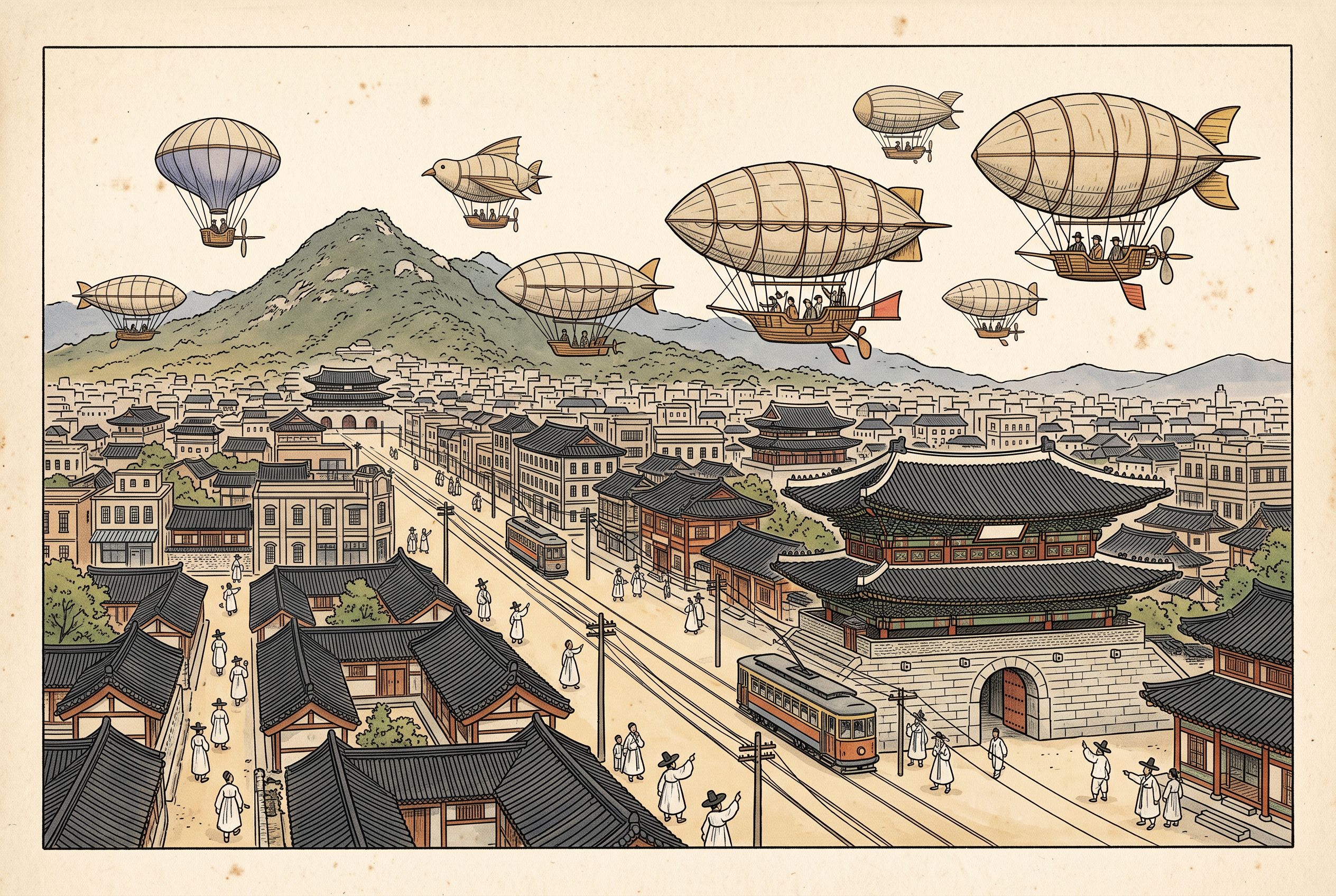
How a Korean illustrator of the 1900s Korean Empire (Daehan Jeguk, Korean, NOT Japanese, NOT Chinese) might have imagined Hanyang a hundred years later: a hand-coloured lithograph newspaper illustration filling the whole image. Curved Korean giwa tile roofs of hanok houses and a palace gate in the foreground, electric streetcars on the main avenue, a fleet of hot-air dirigibles with hanji-paper envelopes and wooden gondolas floating over Bugaksan mountain, people in white Korean hanbok and wide black gat hats looking up and pointing. Fine black linework, flat watercolour washes in pale indigo, ochre and persimmon red, aged paper. No text, no letters, no hangul, no Chinese characters, no signboards with writing.