전체 작품
놀이터에 게시된 모든 공개 작품을 최신순으로 둘러보세요· 14페이지
[작은 세계] 필름 통 속 단관 극장
작은 세계
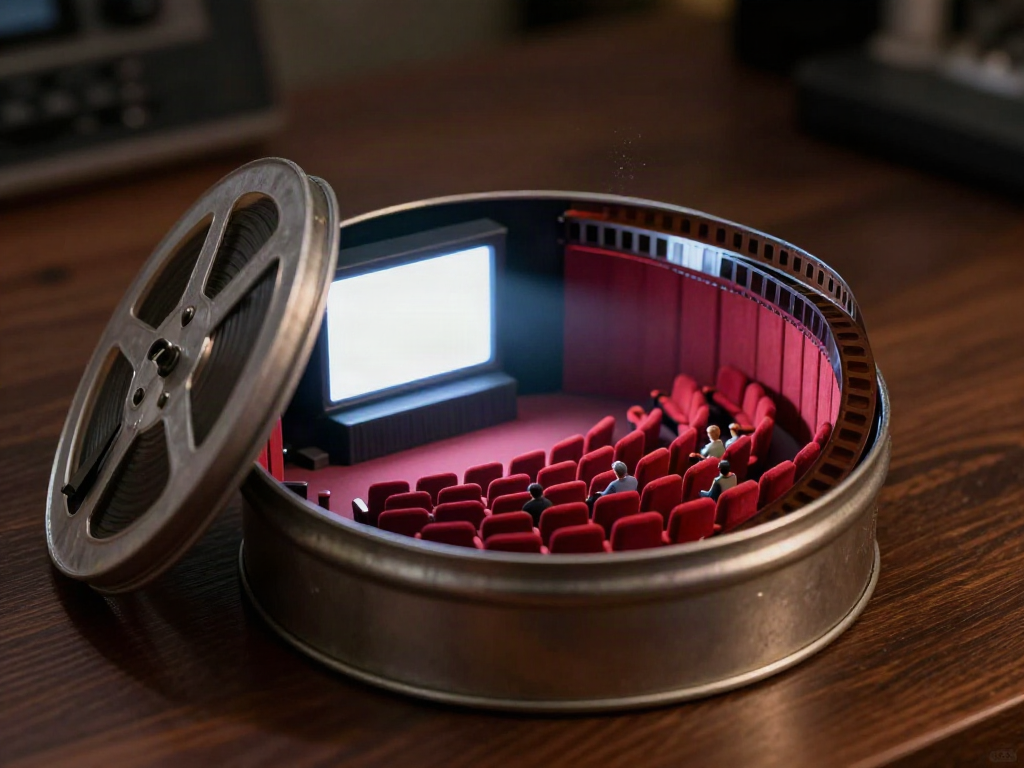
A miniature old single-screen movie theatre built inside an open round metal film reel canister, photographed in macro on a dark wooden editing table. The tin lid leans against the side; the canister's round interior is the auditorium — tiny rows of red velvet seats curve in concentric arcs following the circular wall, a small glowing blank white screen stands at one side, and the coiled 35mm film itself spirals around the outer rim like a balcony rail. A beam of light from a tiny projection booth cuts through floating dust in the dark. A few miniature moviegoers sit in the seats. The canister stays completely real: scratched dull aluminium, one dented edge. Tilt-shift miniature effect, cinematic low light. No text, no letters, the screen blank white.
[작은 세계] 철제 필통 속 교실
작은 세계
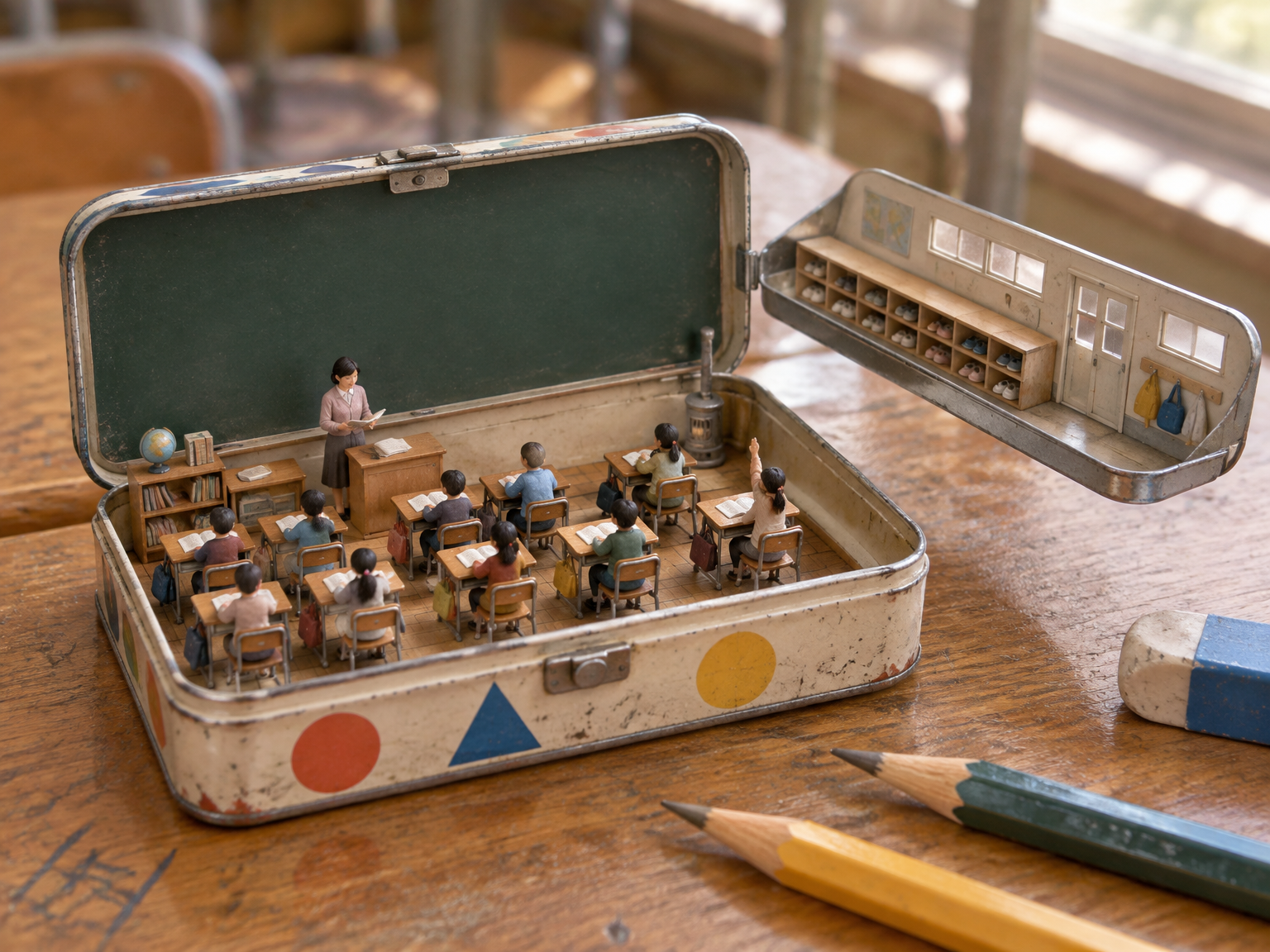
A miniature 1990s Korean primary school classroom built inside an open two-tier metal pencil case, photographed in macro on a wooden school desk. The lid stands open upright and its inner face is the blackboard, plain dark green and empty; the lower tier is the classroom floor with rows of tiny wooden desks and chairs, and the hinged upper tray, swung out to the side, becomes the hallway with a row of tiny shoe cubbies. A teacher stands at the front, small pupils sit at the desks, one raising a hand. Real pencils and an eraser lie beside the case at giant scale. The pencil case stays completely real: painted tin with scratches and a magnetic catch, its outside decorated with plain simple shapes only. Tilt-shift miniature effect, soft window light. No text, no letters, the blackboard blank.
[신들이 아직 여기 있다면] 문전신
신들이 아직 여기 있다면
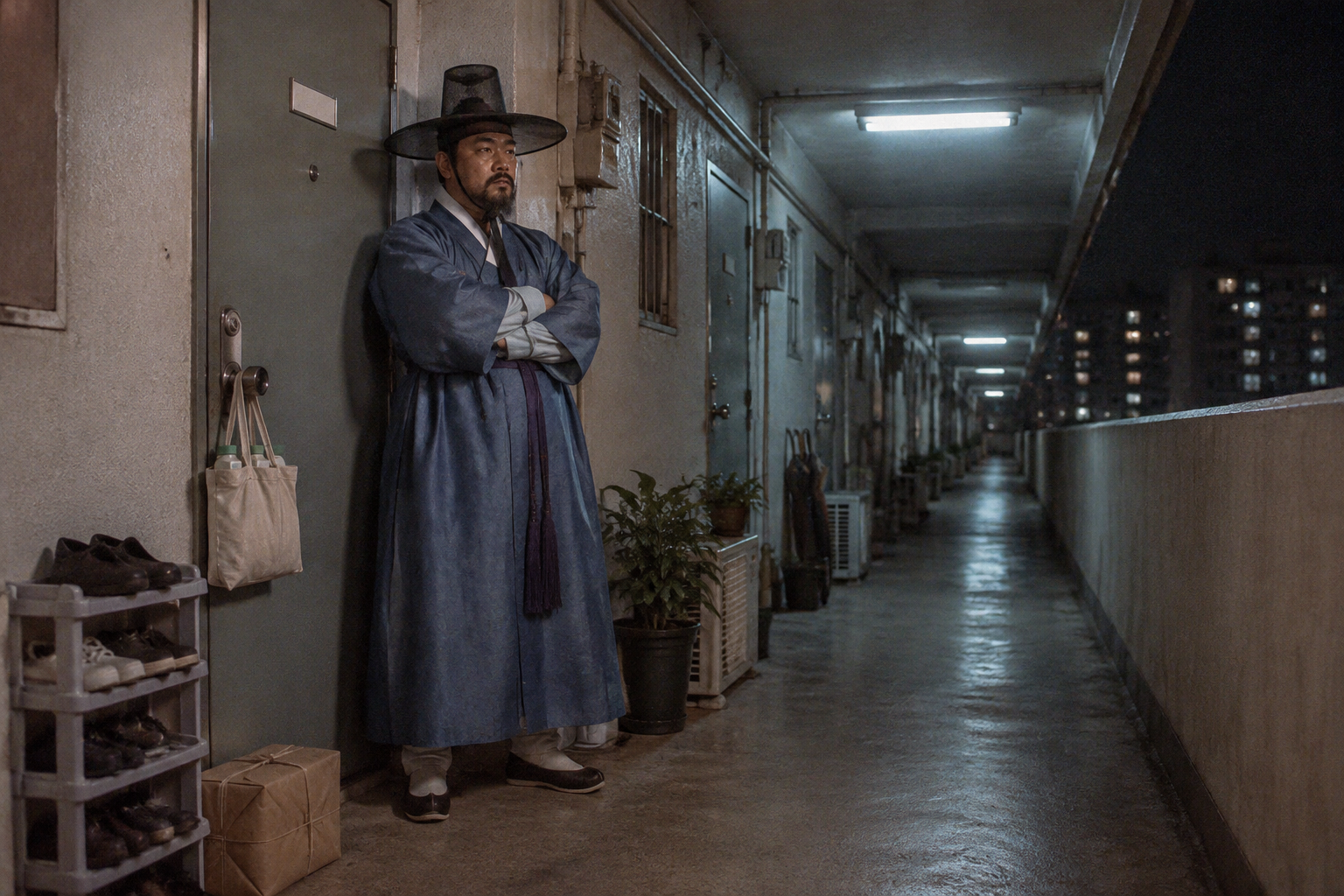
Munjeonsin, the Korean god of the front door who decides what may enter a home (Korean folk belief, Korean traditional clothing and objects, NOT Japanese, NOT Chinese.), in the open-air corridor of an old 1990s Korean apartment block at night, shot on grainy colour negative film. A broad-shouldered middle-aged man in a faded blue hanbok and black gat hat stands with his back against a steel apartment front door, arms folded, like a doorman on duty. Beside him: a cloth milk-delivery bag hanging on the door handle, a plastic shoe rack, a potted plant, a parcel in plain brown paper. A single fluorescent tube lights the long corridor, identical doors receding into the distance. The door number plates are blank. He fills about half the frame height. Steady and protective. No text, no letters, no hangul, no readable signs, no logos.
[신들이 아직 여기 있다면] 오늘이
신들이 아직 여기 있다면
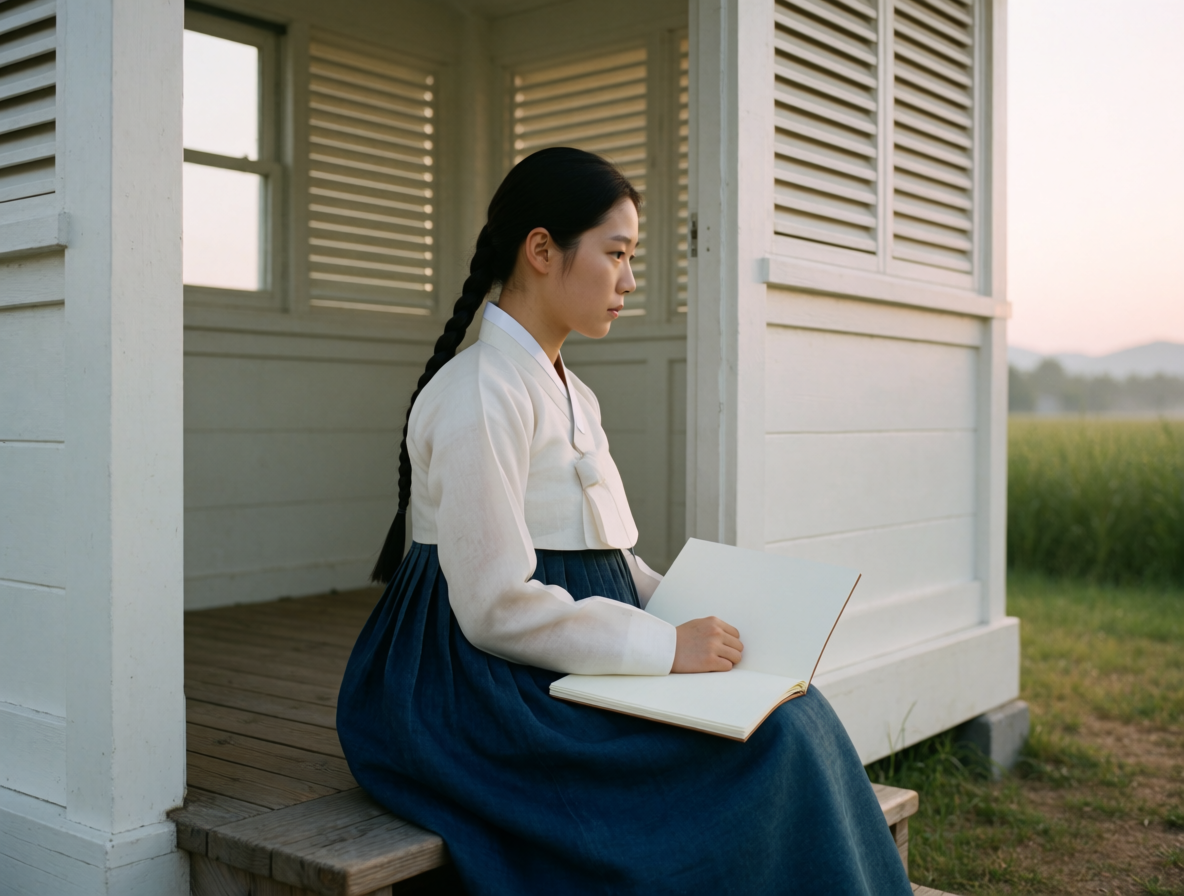
Oneuri, the orphan girl of Korean shamanic myth who travelled to Woncheongang, the land where the four seasons are kept, and became the goddess who keeps them (Korean folk belief, Korean traditional clothing and objects, NOT Japanese, NOT Chinese.), at a small rural weather observation station at dawn. A young woman with a long single braid in a plain white and indigo hanbok sits on the step of a white louvered instrument shelter, a blank open notebook on her knees, a bundle tied in cloth beside her. On the lawn around her: a rain gauge, a wind vane, a thermometer mast. Behind her one tree whose branches show spring blossom on the left, green summer leaves in the middle, red autumn leaves and bare winter twigs on the right. Pale dawn light. She fills about half the frame height. No text, no letters, no hangul, no readable signs, no logos.
[없는 문명] 식구 숟가락
없는 문명
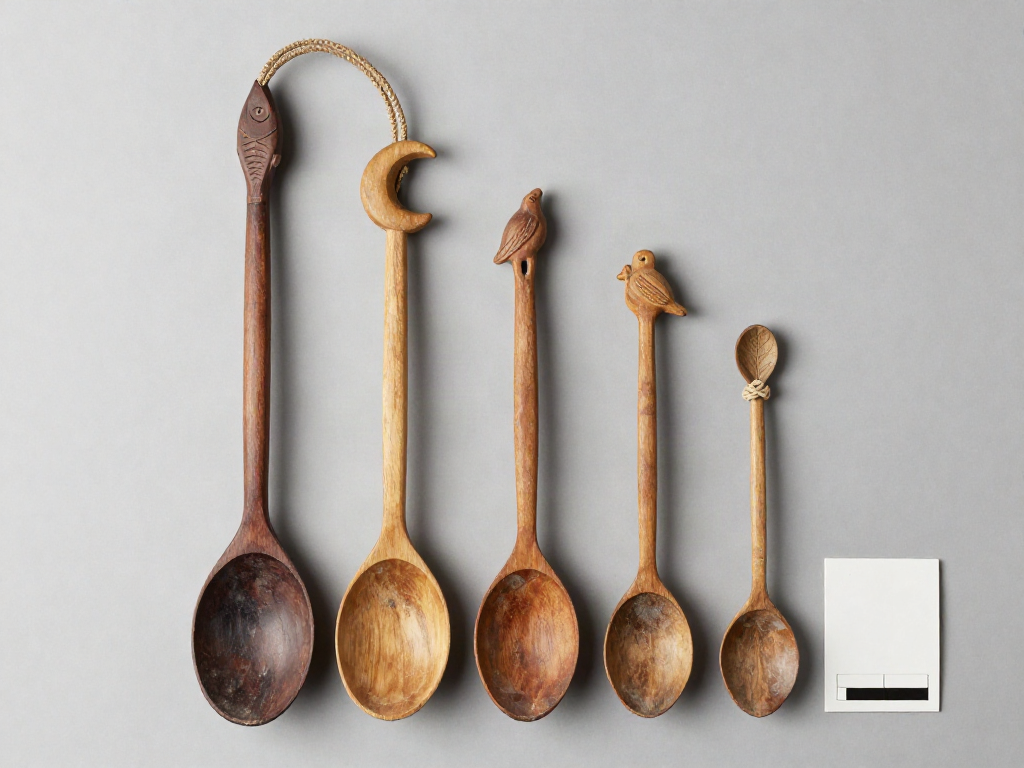
Museum catalogue photograph of a household set of eating spoons from a civilisation that never existed: six carved wooden spoons with long slender handles, laid side by side from largest to a very small one, each handle ending in a different carved finial — a fish, a crescent moon, a seed, a bird, a leaf, a tiny round knot — so each person in the house had their own. The bowls are worn thin and darkened at the front edge from years of use, the smallest spoon barely used. They hang from a shared braided cord threaded through holes in the handles, laid out flat. Neutral grey seamless background, raking light from the left, a black-and-white scale bar and a small accession card beside the object with no legible writing on it. Archaeological museum catalogue documentation style. No readable text, no letters, no numbers, no logos.
[신들이 아직 여기 있다면] 자청비
신들이 아직 여기 있다면
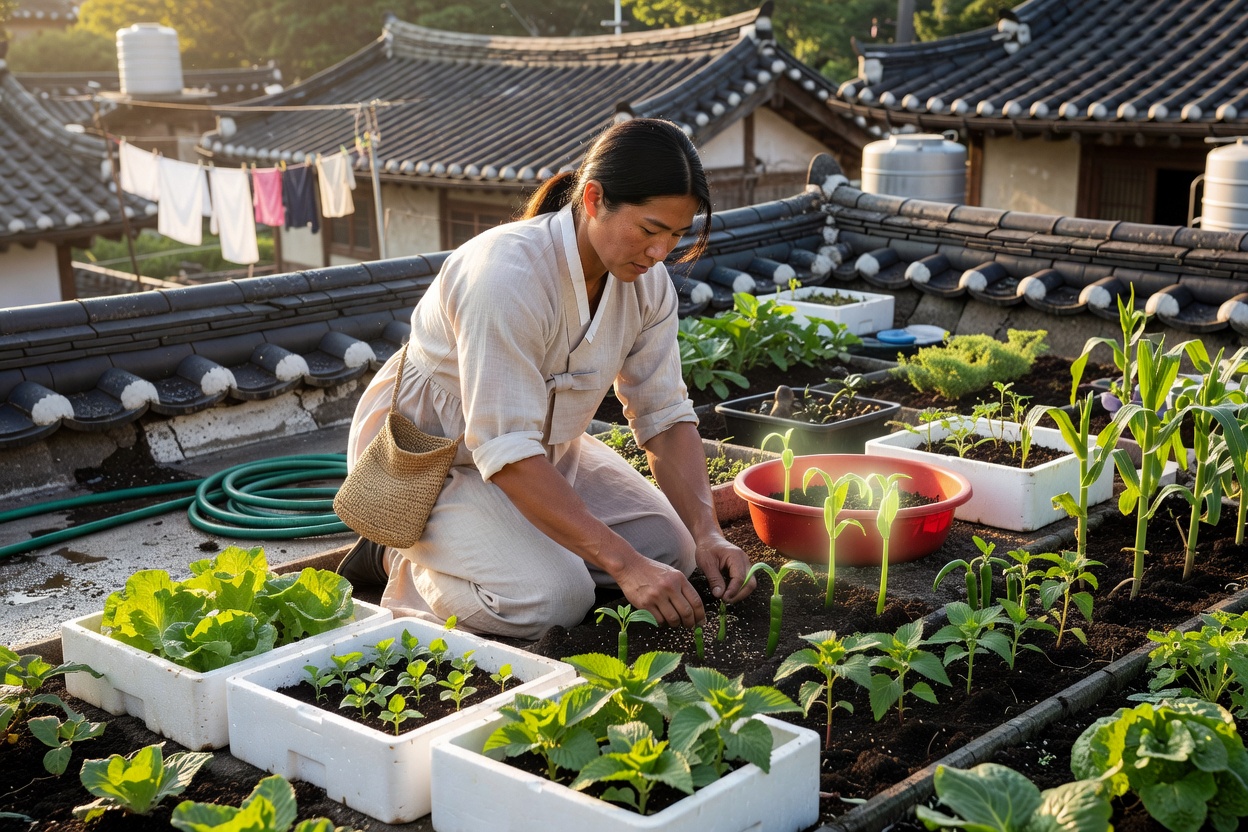
Jacheongbi, the Jeju goddess of farming who brought the five grains down from heaven (Korean folk belief, Korean traditional clothing and objects, NOT Japanese, NOT Chinese.), in a rooftop vegetable garden on an old Korean villa building in early summer. A strong young woman in a plain ramie hanbok with her sleeves tied back and a woven seed pouch at her hip kneels between styrofoam boxes and rubber basins planted with lettuce, perilla, chilli and corn, pressing seeds into the soil with her fingers. Plain unprinted styrofoam boxes, a green garden hose, a red rubber basin, laundry drying behind, neighbouring rooftops with water tanks. Morning sun. The seedlings her hand has touched stand a little taller and greener. She fills about half the frame height. No text, no letters, no hangul, no readable signs, no logos.