전체 작품
놀이터에 게시된 모든 공개 작품을 최신순으로 둘러보세요· 15페이지
[없는 문명] 새 머리 그림자 인형
없는 문명
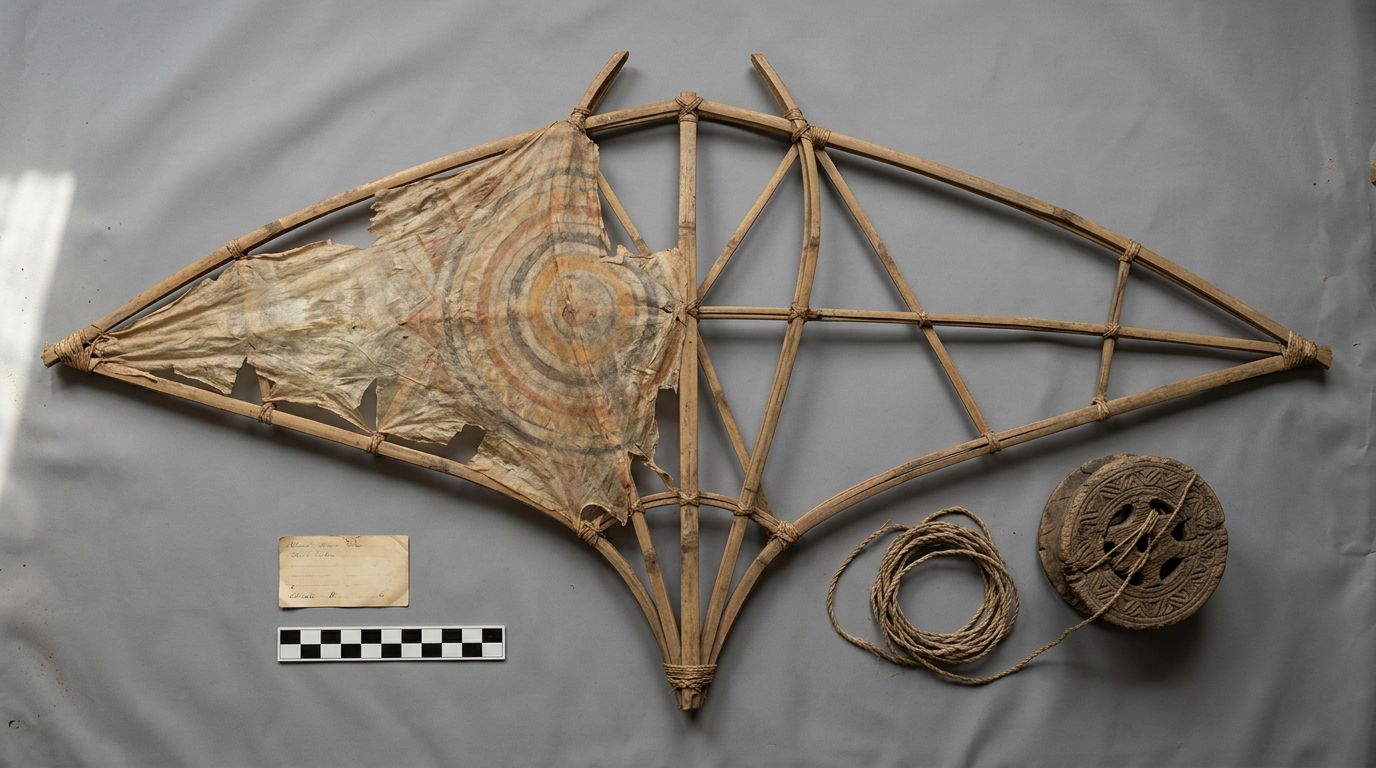
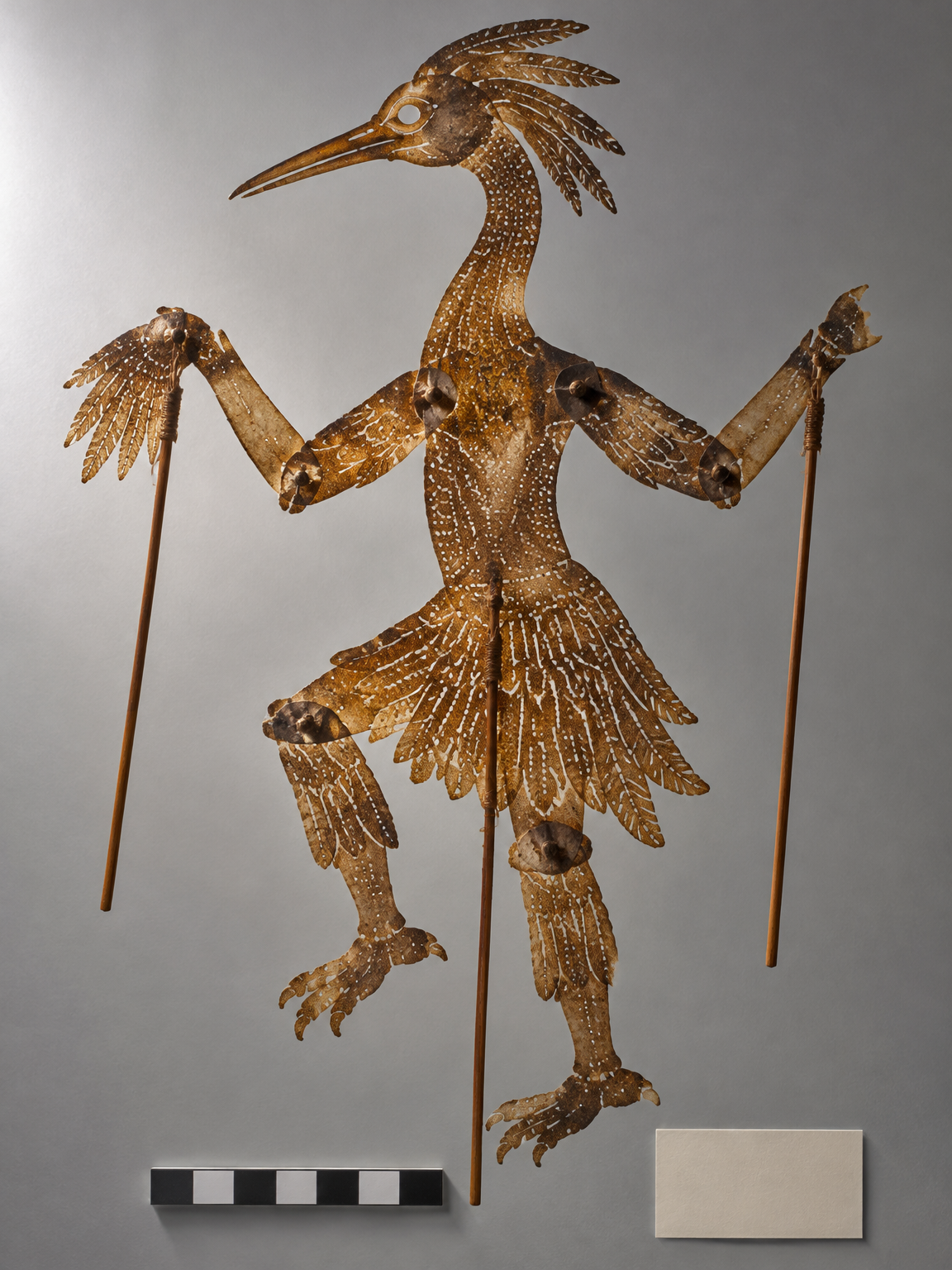
Museum catalogue photograph of a shadow puppet from a civilisation that never existed: a flat figure of a long-necked bird-headed dancer cut from thin translucent rawhide, about forty centimetres tall, its body pierced with hundreds of tiny punched holes forming feather patterns, joints at the shoulders, elbows and knees tied with knotted sinew so the limbs can swing, and three thin wooden control rods attached. The hide is amber where thin and brown where thick, one hand is torn off at the wrist. Displayed flat on a light box so light glows through the holes. Neutral grey seamless background, raking light from the left, a black-and-white scale bar and a small accession card beside the object with no legible writing on it. Archaeological museum catalogue documentation style. No readable text, no letters, no numbers, no logos.
[신들이 아직 여기 있다면] 세오녀
신들이 아직 여기 있다면
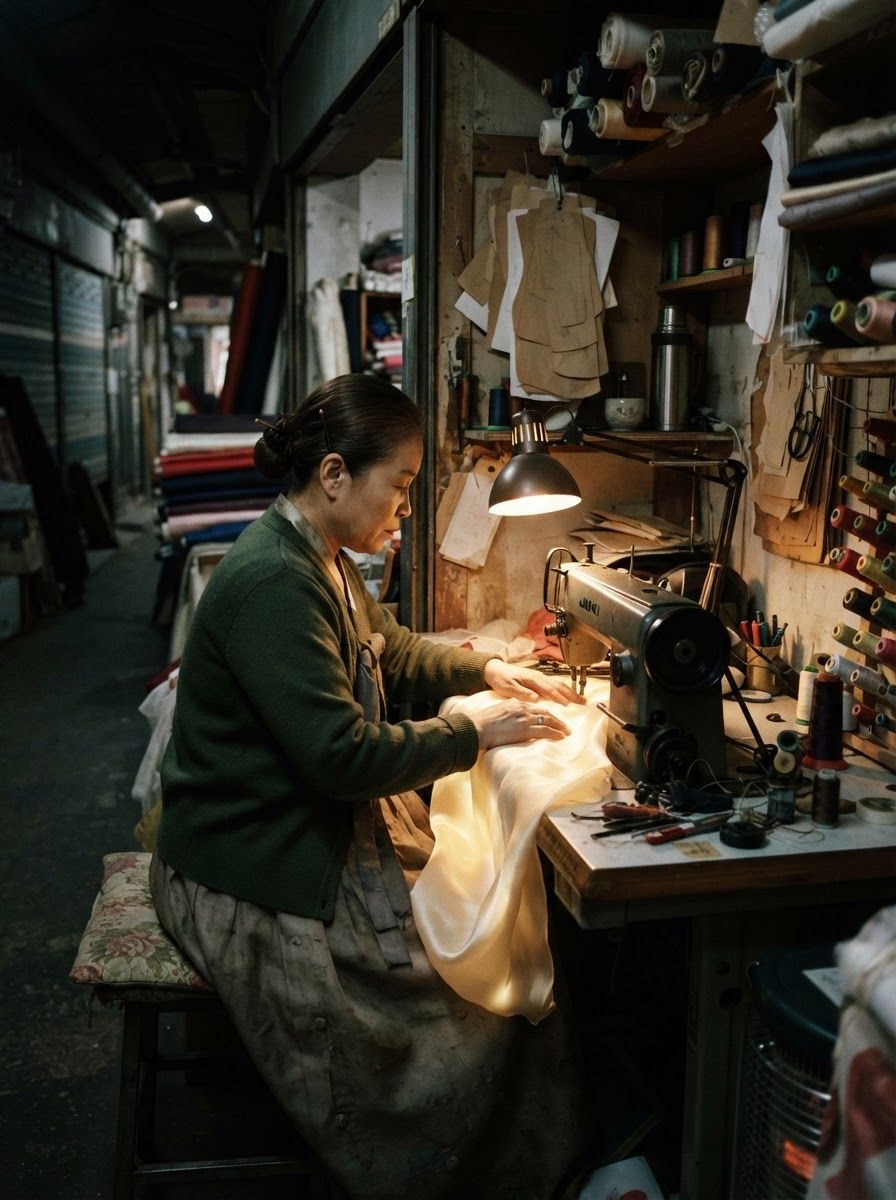
Seonyeo, the weaver of the Korean legend of Yeonorang and Seonyeo, whose woven silk brought back the light of the sun and moon (Korean folk belief, Korean traditional clothing and objects, NOT Japanese, NOT Chinese.), working late at night in a tiny sewing workshop inside an old Korean fabric market building. A middle-aged woman in a plain cardigan over an old-style hanbok skirt sits at an industrial sewing machine under a single desk lamp, feeding through a length of pale silk that glows softly golden like morning sunlight, lighting her face and the shelves. Around her: stacked bolts of plain fabric, spools of thread, paper patterns pinned to the wall, a thermos, a cushion on her stool. Dark corridor outside. She fills about half the frame height. No text, no letters, no hangul, no readable signs, no logos.
[신들이 아직 여기 있다면] 하백
신들이 아직 여기 있다면
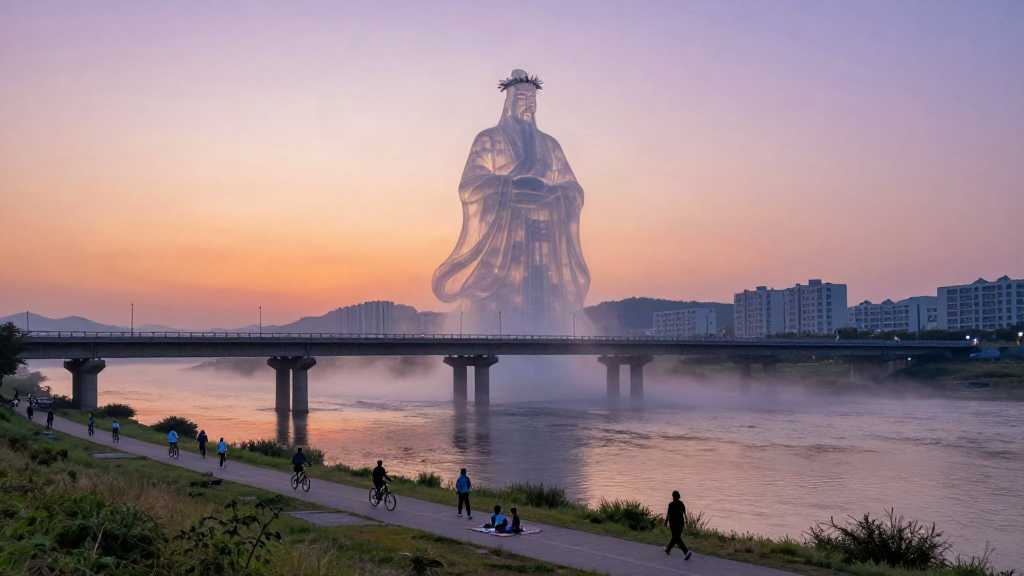
Habaek, the god of the river and father of Lady Yuhwa in the Goguryeo founding myth (Korean folk belief, Korean traditional clothing and objects, NOT Japanese, NOT Chinese.), rising from a wide Korean city river at dusk. An immense translucent old man formed of river water and mist, his body rising from the water to the height of the concrete bridge piers, a long beard flowing downstream, a crown of reeds, seen from the bike path on the riverside park. Below him tiny cyclists, joggers and a family on a picnic mat carry on as usual, each person about one fortieth of the frame height. A plain concrete road bridge without towers, distant generic apartment blocks. Orange and violet afterglow on the water. Majestic and calm. No text, no letters, no hangul, no readable signs, no logos.
[없는 문명] 열쇠 꾸러미
없는 문명
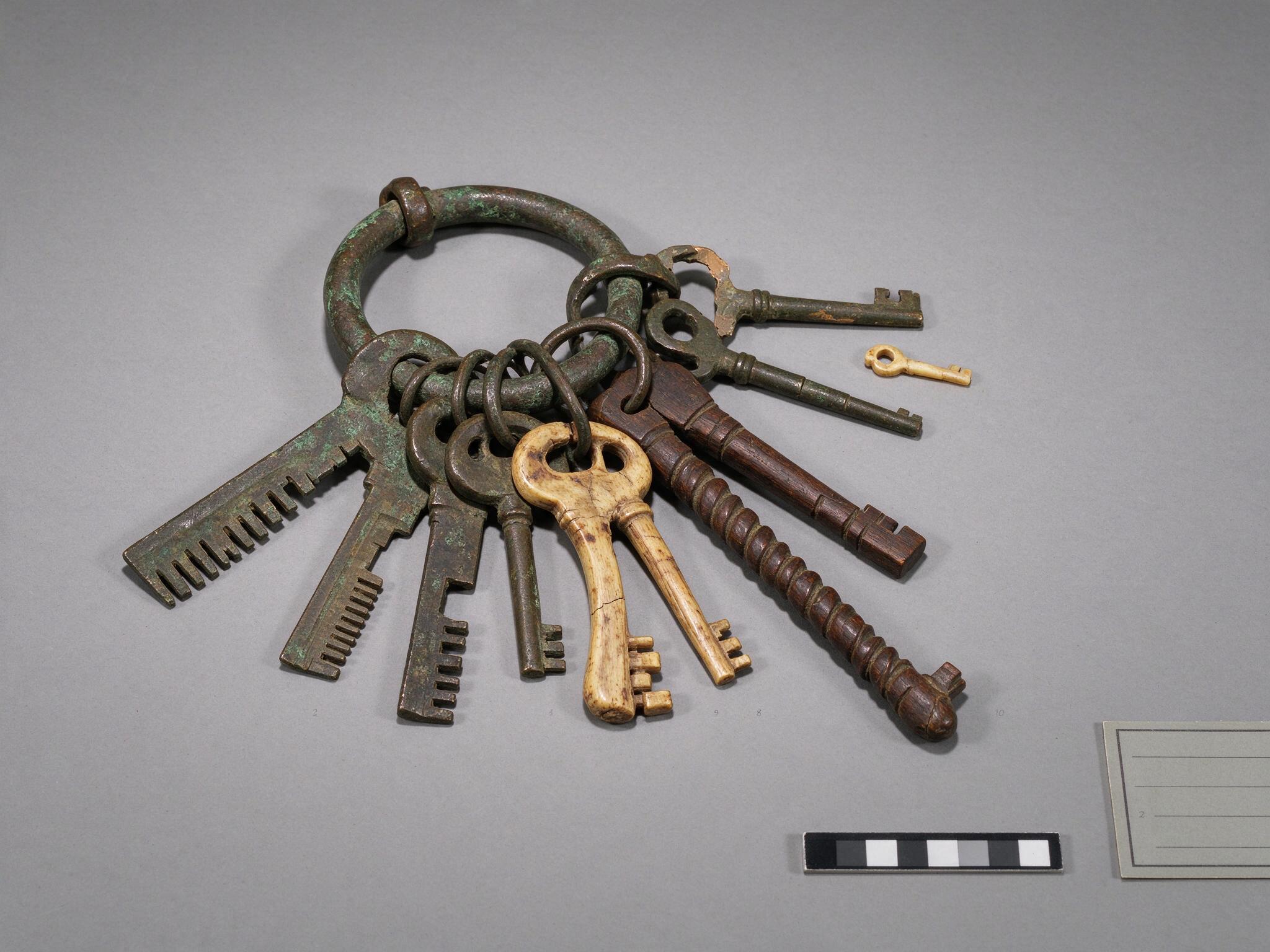
Museum catalogue photograph of a ring of keys from a civilisation that never existed: a heavy bronze ring holding eleven keys of very different designs — some flat bronze blades with comb-like teeth, some carved bone with peg patterns, one long wooden key with a spiral shaft, one tiny key no longer than a fingernail. Green patina on the bronze, the bone keys yellowed, the bow of one key worn thin from a thumb. The ring is fanned out so every key is visible. Photographed on 35mm colour film, faint grain. Neutral grey seamless background, raking light from the left, a black-and-white scale bar and a small accession card beside the object with no legible writing on it. Archaeological museum catalogue documentation style. No readable text, no letters, no numbers, no logos.
[신들이 아직 여기 있다면] 가믄장아기
신들이 아직 여기 있다면
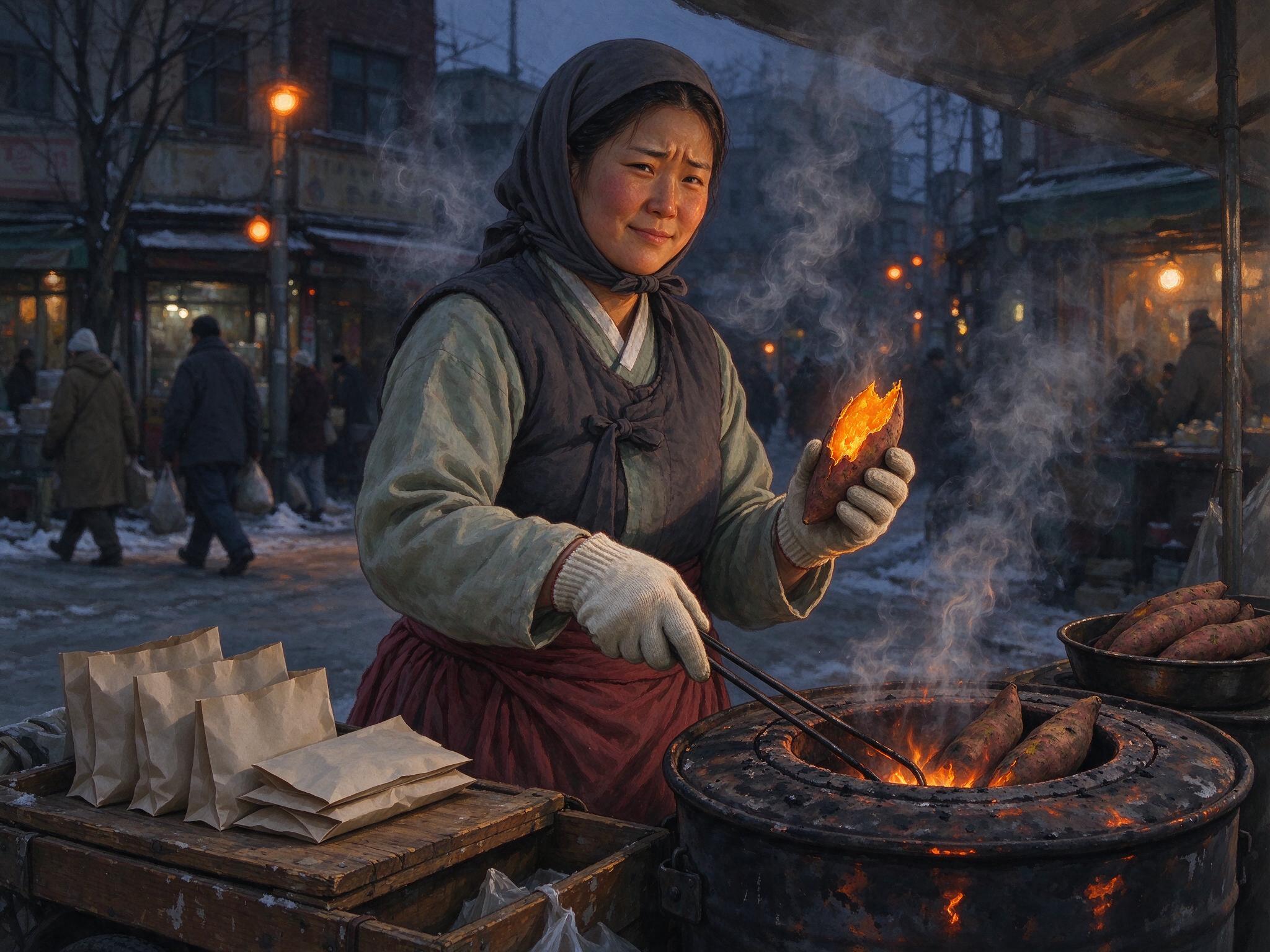
Gamunjang Agi, the Korean goddess of fate who said she lives by her own luck and found gold while digging yams (Korean folk belief, Korean traditional clothing and objects, NOT Japanese, NOT Chinese.), now running a roasted sweet potato stall on a winter street corner at dusk. A sturdy young woman with a plain dark headscarf, a padded vest over a faded hanbok jeogori and cotton work gloves turns sweet potatoes in a black oil-drum roaster with tongs, smoke curling up. One split sweet potato in her hand glows faintly golden inside. Folded paper bags on a plank, an old wooden cart, a few passers-by in winter coats. She fills about half the frame height. Content and self-assured, warm orange light from the drum. No text, no letters, no hangul, no readable signs, no logos.
[없는 문명] 바람종
없는 문명
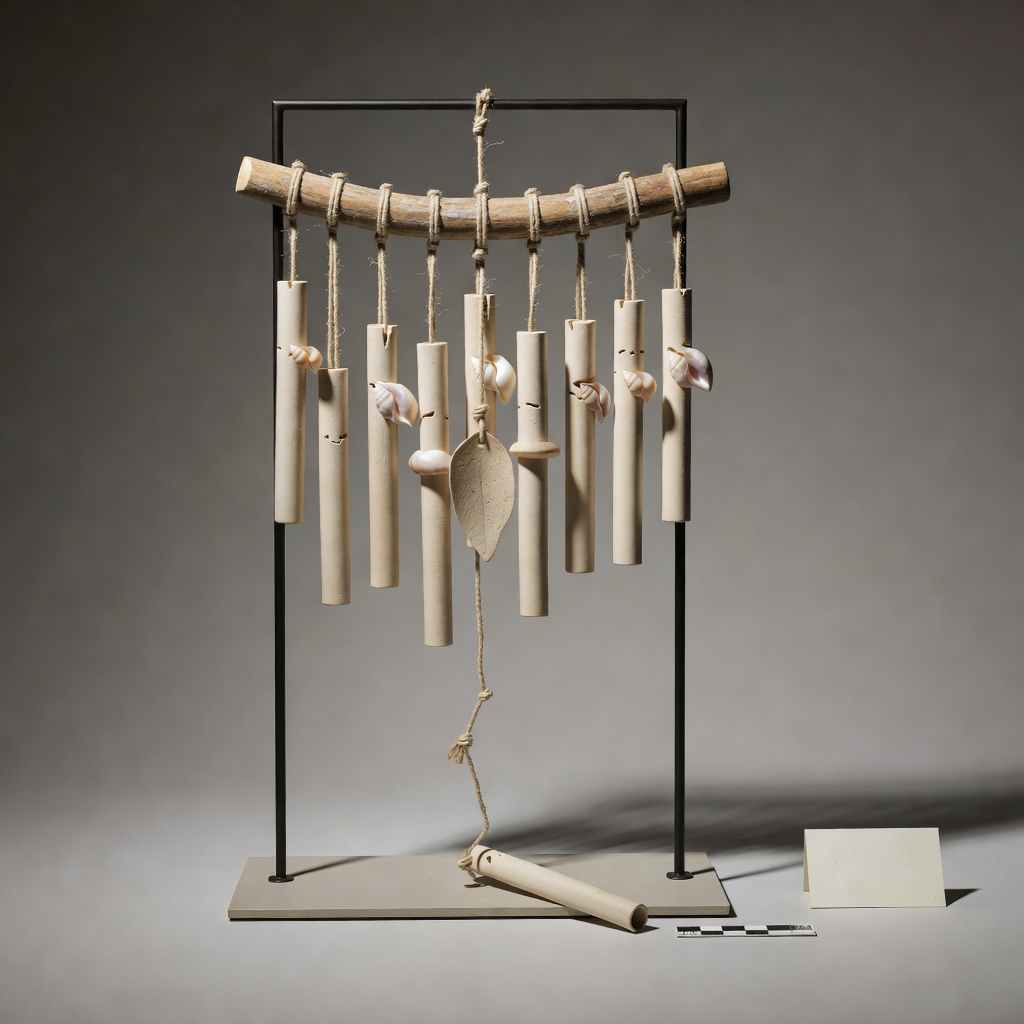
Museum catalogue photograph of a wind chime from a civilisation that never existed: a curved driftwood bar hanging from a museum display stand, with eleven tubes of pale fired clay of graduated lengths suspended on knotted cords, and among them five polished spiral seashells. In the centre hangs a flat clay striker shaped like a leaf. The clay tubes have small hand-cut notches near their tops, slightly different on each, as if tuned by filing. One cord is broken and its tube lies on the base below. Neutral grey seamless background, raking light from the left, a black-and-white scale bar and a small accession card beside the object with no legible writing on it. Archaeological museum catalogue documentation style. No readable text, no letters, no numbers, no logos.
[없는 문명] 토기 벌통
없는 문명
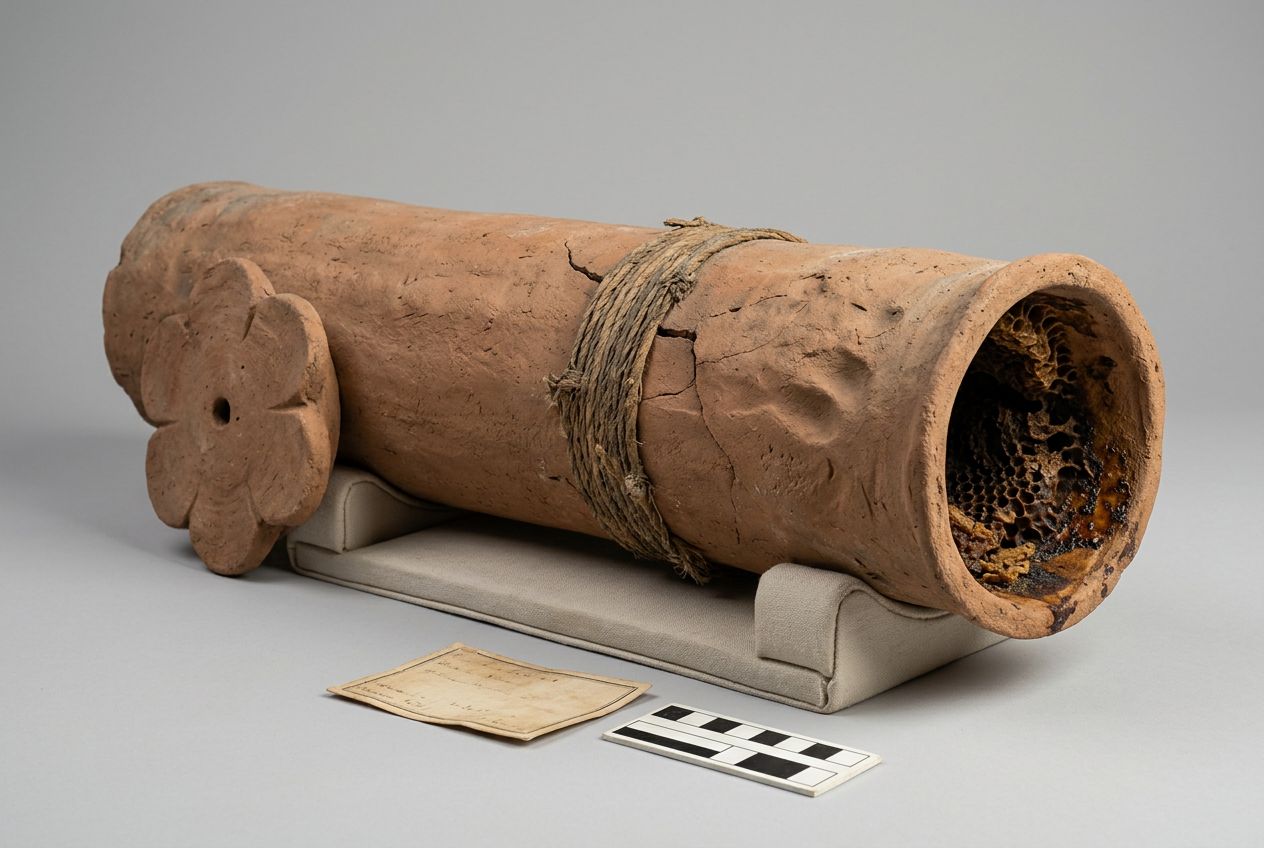
Museum catalogue photograph of a ceramic beehive from a civilisation that never existed: a long horizontal tube of unglazed reddish earthenware about sixty centimetres long, lying on a padded cradle, one end closed with a removable lid shaped like a flower with a single small bee-sized entrance hole at its centre, the other end open to show dark amber wax residue and remnants of old honeycomb inside. Fingermarks from the potter visible on the surface, a crack repaired in antiquity with a band of plant-fibre cord. Neutral grey seamless background, raking light from the left, a black-and-white scale bar and a small accession card beside the object with no legible writing on it. Archaeological museum catalogue documentation style. No readable text, no letters, no numbers, no logos.